
What Is a Sewage Ejector Pump, and When Do You Actually Need One?
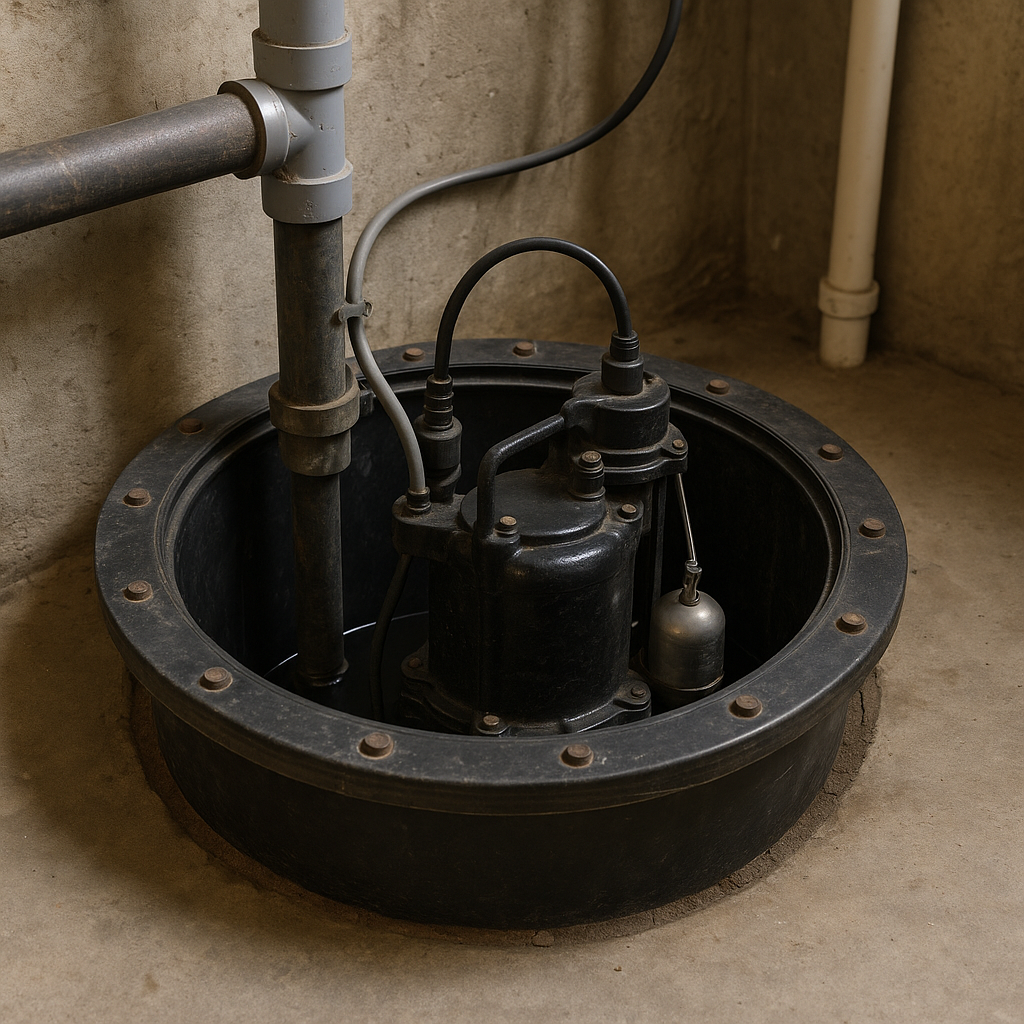
You want to put a bathroom, a laundry sink, or a wet bar in the basement, and the plumber tells you a standard drain connection will not work down there. The reason is simple once you see it: the fixture sits below the main sewer or septic line, and water does not flow uphill on its own. That is the exact problem a sewage ejector pump is built to solve.
Most of a house drains by gravity. Every toilet, tub, and sink above the main line lets its waste fall down and slope out to the sewer or septic tank without any help. A fixture below that line has nowhere to fall to, so the waste has to be lifted up and over to the gravity drain. An ejector pump is the machine that does the lifting.
How a Sewage Ejector Pump Works
The pump lives inside a sealed basin, a heavy plastic pit set into the basement floor. Waste and greywater from the below-grade fixtures drain into that basin, and they collect. A float rides on the rising liquid, and when the level reaches the trigger point, the float switch turns the pump on. The pump then pushes the collected effluent up through a discharge pipe, over to the height of the gravity sewer line, and into it, so from that point on, the house drains the rest of the way by gravity as usual. Once the basin empties, the float drops, the switch cuts power, and the pump waits for the next fill.
Think of it like a bucket hoist at the bottom of a mine: nothing down there can climb out on its own, so a machine collects the load, raises it to the level where an ordinary path exists, and hands it off. The ejector does the same job for wastewater that started its life below the exit.
A few parts make that cycle reliable, and each one matters:
- The basin, or pit- The sealed container that collects the waste and houses the pump. The seal is not optional. It keeps sewer gas contained and keeps the biohazard where it belongs.
- The pump and float switch- The motor that moves the effluent and the float that tells it when to run. Set the float too high, and the basin overfills; set it too low, and the pump runs more often than it should.
- The check valve- A one-way valve on the discharge pipe that stops the lifted sewage from draining straight back into the pit once the pump shuts off.
- The vent- A pipe that ties the sealed basin into the home's venting system so gases escape safely and air can move as the basin fills and empties.
That last part gets overlooked, so it is worth saying plainly: the vent is what lets the system breathe. Without it, the pump fights a vacuum and moves liquid poorly, and trapped gas has nowhere to go but back into the room.
Ejector, Grinder, or Sump: They Are Not the Same
Three basement pumps get confused constantly, and installing the wrong one causes real trouble.
A sump pump handles clean groundwater. It sits in a pit that collects water seeping in around the foundation and pumps it away to keep the basement dry. It is not built to handle solids and has no business touching sewage.
A sewage ejector pump handles raw sewage and greywater from fixtures below the sewer line. It is built to pass soft solids up to a certain size and lift them a modest distance to a nearby gravity drain.
A grinder pump goes further. It macerates waste into a fine slurry so the material can be forced a longer distance and at a higher elevation, often into a pressurized main rather than a gravity line. If the discharge run is long or the lift is steep, or the property ties into a low-pressure sewer system, a grinder is usually the right tool. For a basement bath, a short hop from an existing gravity drain, an ejector is the normal choice.
The short version: sump moves clean water, ejector moves sewage a little way, grinder chews it up and moves it a long way.
When You Actually Need One
The rule of thumb is about height, not the type of fixture. If a fixture that produces sewage or greywater sits below the level of the main sewer or septic line, gravity cannot carry its waste out, and an ejector pump is how you bridge the gap. Common situations include:
- A basement bathroom addition, especially a full bath with a toilet.
- A below-grade laundry room, where a washer and utility sink drain lower than the main line.
- A below-grade wet bar, a basement kitchenette, or a slop sink in a finished lower level.
- Any toilet, shower, tub, or sink whose drain sits below the grade of the line leaving the house.
If everything you are adding drains above the main line, you do not need an ejector, and you should not pay for one. The pump earns its place only when the drop below the line forces the issue.
Plumbing code shapes how the system gets built, even where it is required. In general terms, the basin must be sealed, the system has to be properly vented, and the connections have to be sized and supported correctly. The specifics are exactly why the pump, its wiring, and its venting are professional work rather than a weekend project.
Keeping an Ejector Pump Healthy
An ejector pump is a mechanical device sitting in a hostile environment, so a little care goes a long way. Most of it comes down to what you send into it and paying attention to how it behaves:
- Watch what goes down- The below-grade fixtures should see human waste, toilet paper, and normal greywater, and nothing else that can bind up moving parts.
- Test the float- The float switch is the most common failure point. Making sure it moves freely and triggers the pump is worth doing periodically.
- Check the check valve- A worn or clogged check valve lets pumped waste fall back into the pit, which forces the pump to run again on the same water.
- Listen for short-cycling- A pump that clicks on and off rapidly, or hums without emptying the pit, is telling you something is wrong before it fails outright.
Because the basin holds raw sewage and the pump runs on household power in a wet space, opening it up is not a homeowner’s job. Sewer gas is a genuine hazard, the contents are a biohazard, and the electrical side deserves respect. Above all, never cap or bypass the vent to quiet an odor, because that trades a small nuisance for a system that cannot work and gas that has nowhere safe to go.
Frequently Asked Questions
A sump pump moves clean groundwater away from the foundation to keep the basement dry, while an ejector pump handles raw sewage and greywater from fixtures below the sewer line. They collect completely different things and are built to different standards, so they are not interchangeable. Dropping a sump pump into a sewage basin is a common mistake that ends in a jammed impeller, because it is not designed to pass solids.
An ejector passes soft solids up to a certain size and lifts them to a nearby gravity line, so the waste travels more or less intact. A grinder pump first macerates the waste into a slurry, allowing it to be pushed much farther and higher, typically into a pressurized main. The grinder's cutting action is what makes it the choice when the discharge has to travel a long horizontal run or climb a steep lift.
The vent ties into the home's vent stack, the same pipe that runs up through the roof, so the gases coming off the sewage have a safe route out above the house rather than into the room. Two of those gases matter most: hydrogen sulfide, the rotten-egg smell, and methane, both of which are foul and, in enough concentration, hazardous. The vent also lets air move back in as the pump draws the basin down, so the pump is not fighting a partial vacuum. Cap or bypass it, and the pump moves liquid poorly while those gases back up with nowhere to go.
The check valve prevents pumped sewage from draining back into the pit after each cycle, so the pump does not have to lift the same water again. When it wears out or clogs with debris, backflow starts, and the pump short-cycles, running again and again on water it has already moved. That repeated cycling wears the motor far faster than normal use, so a failing check valve quietly shortens the life of the whole pump.
Wipes, including those labeled flushable, along with grease, feminine products, dental floss, and any hard debris, are the usual culprits because they jam the impeller or foul the float rather than break down. Grease is especially deceptive, since it goes down warm and liquid, then congeals and coats the moving parts. Keeping these out of the below-grade fixtures is the single most effective way to avoid a service call.
Many basins carry a high-water alarm float that sounds before an overflow, so a tripped alarm is often the first warning you get. Short of that, watch the pit itself: water that lingers and never fully pumps down between cycles is an early sign that the impeller or motor is losing power and can no longer clear the load. A pump that hums without emptying the pit, or one that clicks on and off in quick bursts, points in the same direction. Any of these means the unit should be looked at before it quits entirely, and the basement backs up.
Book a below-grade drainage assessment — get the right pump specified and installed before you finish the basement. AT Plumbing Services serves Scarborough, South Portland, and Portland. Call (207) 707-3170 to schedule an assessment.
