
Water Heater Making Noise? What Each Sound Is Warning You
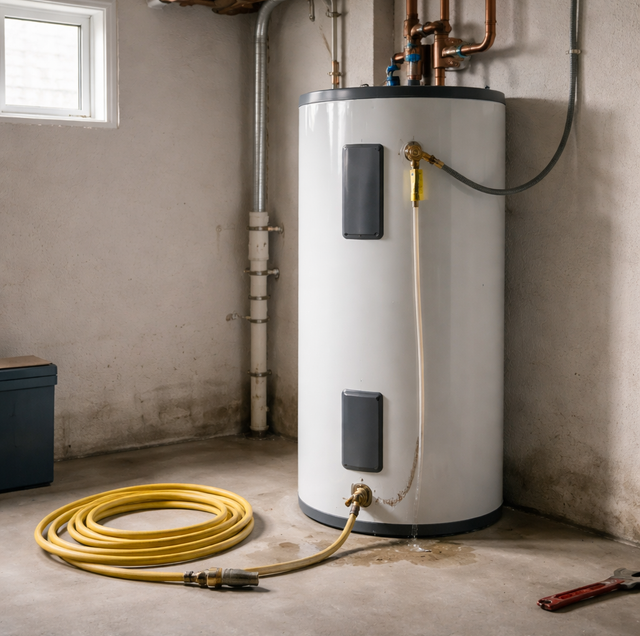
Quick Answer: Most water-heater noise comes from sediment, minerals that settle on the bottom of the tank and trap water underneath. As that trapped water heats and boils, it forces its way out and creates a popping or rumbling sound. The pitch and rhythm of the noise point to the cause: rumbling means sediment, a whistle or hiss can mean a restricted valve or a pressure-relief warning, and knocking usually means loose pipes reacting to a valve closing.
A water heater is supposed to work in the background without announcing itself. When it starts popping, rumbling, whistling, or knocking, the tank is telling you something has changed inside it. Most of these noises trace back to one culprit: sediment. The good news is that the specific sound is a diagnostic clue. Learn to read it, and you can usually tell the difference between a harmless quirk and a warning that deserves a phone call.
Why Sediment Is Almost Always the Root Cause
Every gallon of water that enters your tank carries dissolved minerals, mainly calcium and magnesium. Areas with harder water carry more, but no supply is entirely free of them. When water is heated, those minerals fall out of solution and settle as a gritty layer on the bottom of the tank, right above the burner on a gas unit or around the lower element on an electric one.
Over months and years, that layer thickens into a crust. It behaves like a lid over the hottest part of the tank. Water gets trapped underneath it, keeps heating past the point where it would normally rise and circulate, and eventually boils in place. The steam bubbles fight their way up through the sediment, and the collision of boiling water, escaping steam, and hard mineral crust is what you hear as popping or rumbling.
The layer causes more than noise. Because the burner now has to push heat through an insulating crust, the unit runs longer to reach the same temperature. That wastes energy year-round, in the cold months when demand is high and in the warm months when the tank is cycling less but still fighting the same buildup. A sediment-choked tank also runs hotter at the bottom, which stresses the steel and shortens its life.
What Each Sound Is Telling You
A sealed tank behaves like a kettle you can't see into, and the same physics that makes a kettle sing tells you what stage the water inside has reached. The common noises break down like this.
Popping and rumbling: This is the classic sediment sound and the single most common complaint. A low rumble or a series of pops, loudest right after the burner or element kicks on, means water is boiling under a sediment layer. It is rarely an emergency on its own, but it is a clear sign the tank needs flushing and that you are paying more to heat water than you should be.
High-pitched whistling or hissing: A whistle or steady hiss deserves closer attention. It can come from a valve that is only partly open, forcing water through a narrow gap, or from a small leak where escaping water flashes to steam against a hot surface. It can also be the temperature and pressure relief valve, the T&P valve, venting excess pressure. A T&P valve that hisses or drips is doing its job, releasing pressure that could otherwise build to a dangerous level. Never cap or plug it. A hissing T&P is a signal to shut things down and call a plumber, because the underlying pressure problem, not the valve, is the real hazard.
Ticking or tapping: A light, rhythmic tick is usually harmless. Pipes and the heat-trap nipples at the top of the tank expand and contract as hot water moves through them, and metal against a joist or strap makes a soft tapping sound. This is thermal expansion, the same effect that makes baseboard heat click. It needs no repair, though securing a loose pipe will quiet it.
Crackling on a gas unit: A faint crackling or sizzling on a gas water heater often comes from condensation. When cold water fills the tank, moisture can form on the outside of the tank and drip onto the burner area, where it sizzles off. A little of this during a heavy-use cycle is normal. Persistent crackling, water pooling under the unit, or a burner that struggles to stay lit points to something more, and that is worth a professional look.
Screeching or squealing: A sharp screech usually means water is being forced through a valve that is not fully open, most often the inlet valve on top of the tank or a nearby fixture valve. Check that valves are turned to their full open position. If the sound continues with everything open, a valve may be failing internally.
Knocking or hammering: A loud bang or knock, often when an appliance or faucet shuts off, is water hammer. When a valve closes fast, the moving column of water slams to a stop and the shock travels through the pipes, knocking them against framing. It is not strictly a water-heater fault, but the heater's connections are a common place to hear it.
The Fixes, From Simplest to Serious
Not every noise needs a plumber, and not every noise is safe to chase yourself. Work from the least invasive fix upward.
Flush the tank: Flushing clears the sediment that causes most noise. Draining and refilling the tank washes the mineral crust out through the drain valve. Done once a year on a typical unit, it keeps the bottom clean and the heater efficient.
The water inside the tank is scalding, so before flushing, shut off the power at the breaker for an electric unit or set a gas unit to pilot or off, then let the tank cool and run the drain to a safe location, never onto bare skin or across a walkway. Never cap or plug the T&P valve; a hissing or dripping T&P is relieving pressure that could otherwise build to a dangerous level, so shut things down and call a plumber.
Check or replace the anode rod: The anode rod is a sacrificial metal rod that corrodes on purpose so the tank's steel doesn't. As it dissolves, it can accelerate sediment and, in some water chemistries, contribute to noise and odor. Inspecting it every few years and replacing a spent rod extends tank life. Removing and reinstalling one takes some torque and the right socket, so it sits at the edge of a confident homeowner's ability.
Confirm the T&P valve and expansion tank: The T&P valve should be tested gently and never blocked. If your plumbing has a closed system with a backflow preventer, an expansion tank absorbs the pressure spike that heating creates. A waterlogged or missing expansion tank shows up as knocking and as a T&P valve that relieves too often. Verifying these is best left to a plumber, because a mistake here has real consequences.
Secure loose pipes and add water-hammer protection: Tapping and knocking from pipe movement can often be quieted by padding or clamping the offending run. Persistent water hammer sometimes calls for an arrestor installed at the right point in the system.
Homeowner-Safe Versus Call a Plumber
Flushing the tank and securing a rattling pipe are reasonable do-it-yourself jobs for someone comfortable around their water heater, as long as the power or gas is off and the scald risk is respected. Everything past that gets judgment-dependent fast.
Call a plumber right away if the T&P valve is discharging or hissing, if you see water leaking from the tank body, or if the tank is old, heavily scaled, and rumbling hard, since a very corroded tank can be near failure and is safer replaced than nursed. If you smell gas at any point, leave and contact your gas utility before doing anything else. A little popping is a maintenance reminder. A T&P valve relieving pressure is not something to wait on.
Frequently Asked Questions
Once a year suits most homes, but the right interval depends on water hardness. On very hard water, twice a year keeps the sediment layer from crusting over. A quick test: drain a small amount into a clear container from the drain valve. If it runs cloudy or gritty within a few months of the last flush, shorten your schedule.
Yes. A thick sediment layer traps heat against the steel floor of the tank, creating hot spots that weaken the glass lining and the metal beneath it. On gas units, the overheating can also warp the burner. Left long enough, this leads to premature tank failure and leaks, which is why an old, loudly rumbling tank is often past economical repair.
Tankless units don't hold standing water, so they skip the classic sediment rumble, but they are not silent. They can develop a whining or buzzing from the heat exchanger scaling up with the same minerals, and manufacturers recommend periodic descaling with a vinegar or citric-acid flush to clear it. A clicking at startup is just the gas valve and igniter firing, which is normal.
The tank cools overnight as no hot water is drawn, so the burner or element runs its longest recovery cycle first thing in the morning to reheat a full tank. That long, hard heating cycle is when sediment boiling is loudest. The same tank may be nearly silent midday when it only tops off small temperature drops.
A softener reduces the calcium and magnesium that form sediment, so it slows future buildup and can prevent noise from returning after a flush. It won't remove crust that has already hardened onto the tank floor, so flush first, then let the softener keep the tank clean going forward. Softened water also extends the anode rod's usable life.
A steady hum on an electric unit is usually a heating element vibrating as water passes over it, often because the element has loosened slightly or scaled up. It is not dangerous by itself, and tightening or replacing the element quiets it. It becomes a concern only if paired with tripping breakers or scorching around the element, which points to an electrical fault that needs a professional.
Hearing your water heater act up — book a diagnostic before a noise becomes a leak. AT Plumbing Services serves Portland, Scarborough, and South Portland. Call (207) 707-3170.
