
Thermostatic vs Pressure-Balancing Valve: 5 Deciders
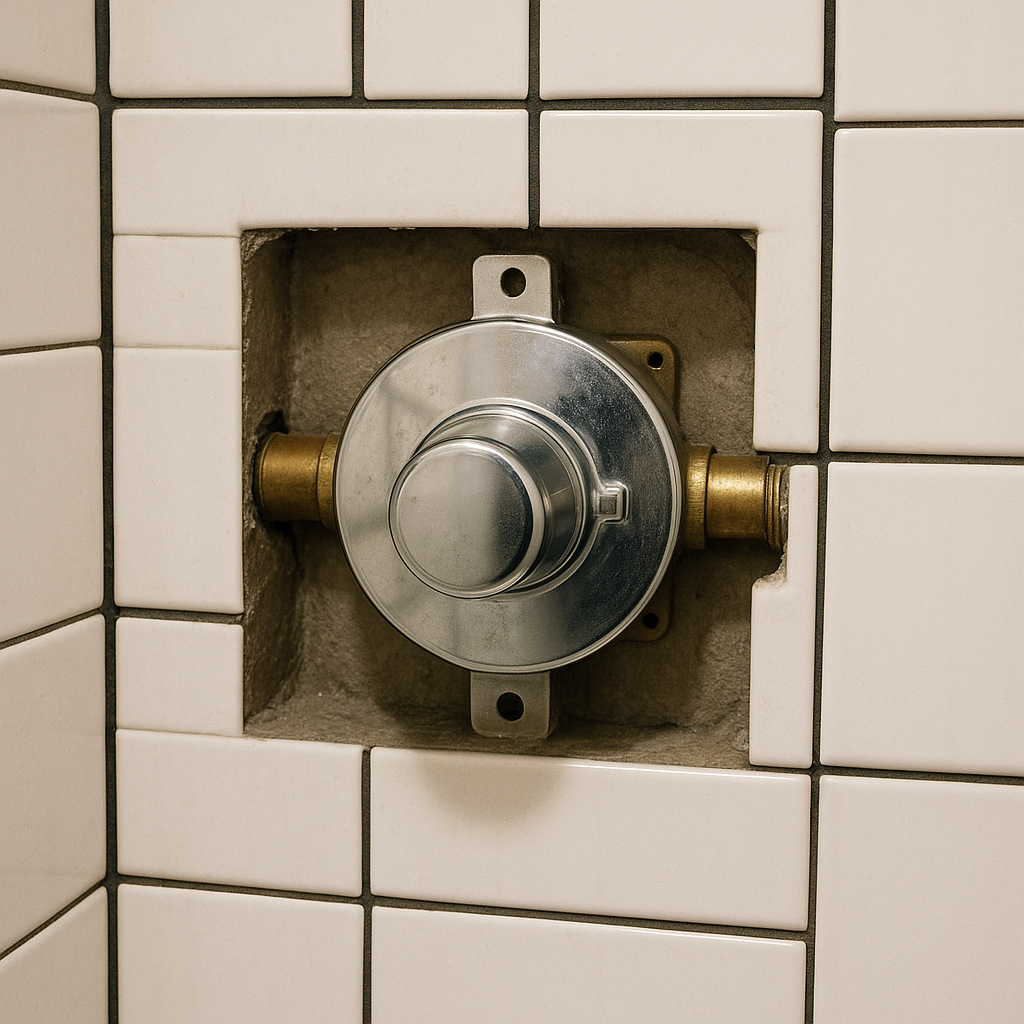
Quick Answer: Both are anti-scald valves. A pressure-balancing valve keeps the hot-to-cold ratio steady when pressure drops, using one handle for temperature and flow. A thermostatic valve reads actual water temperature with a wax element and holds your exact setting, using separate temperature and volume controls. Pick pressure-balancing for a standard single-handle shower, thermostatic for precise comfort or multiple shower heads.
Standing in the shower when a toilet flushes down the hall, you brace for the blast of hot water. That flinch is the whole reason mixing valves exist, and it is also where two very different valves get confused for each other. Both the pressure-balancing valve and the thermostatic valve are anti-scald devices. They protect you from the same danger, but they do it with different mechanics, and that difference decides which one belongs in your bathroom.
Get the mechanism right first, and the choice almost makes itself.
How Each Valve Actually Works
A pressure-balancing valve is the single-handle mixing valve most homes already have. Inside it sits a piston or a small spool that floats between the incoming hot and cold supplies. When someone flushes a toilet or starts the dishwasher and steals cold water, the pressure on the cold side drops. The piston senses that pressure imbalance and slides to throttle the hot side by the same proportion, holding the hot-to-cold *ratio* roughly where you set it. That is why the water no longer spikes to scalding when the pressure shifts.
Here is the catch worth understanding: a pressure-balancing valve holds the *ratio*, not the *temperature*. It has no idea how hot the water actually is. If the water heater is recovering and the incoming hot supply cools off, or the cold supply warms up over the day, the outlet temperature drifts even though the piston is doing its job. One handle controls both how hot and how much, so adjusting temperature also changes flow.
A thermostatic valve works from the other direction. Instead of watching pressure, it reads actual temperature. A wax-filled or bimetallic thermostatic element sits in the mixed water stream and expands or contracts as the temperature changes, mechanically nudging the mix toward your set point. If the hot supply cools, the element contracts, letting more heat through to compensate. It compensates for pressure and supply-temperature changes, so it maintains the temperature you dialed in.
Think of it like cruise control against a plain gas pedal. A pressure-balancing valve is the pedal held at a fixed position: hit a hill, and you slow down. A thermostatic valve is cruise control: it senses the actual speed and feeds more gas to keep you steady. Both get you down the road; one holds the number.
That is also why the two valves are built differently on the wall. A thermostatic valve usually has two controls: one dedicated to temperature and another for volume (flow). You can preset a comfortable temperature, then simply open the volume control to that temperature next time. Because volume is decoupled, a thermostatic valve can also pass higher flow to feed more than one outlet at once.
Side-by-Side Comparison
| Factor | Pressure-Balancing Valve | Thermostatic Valve |
|---|---|---|
| How it works | Balances hot/cold pressure ratio | Reads actual water temperature |
| Holds an exact temperature? | No, ratio only; can drift with supply temp | Yes, corrects to a set point |
| Controls | One handle (temperature and flow together) | Two controls (temperature and volume separate) |
| Multiple heads /body sprays | Limited by single flow path | Handles higher flow for multiple outlets |
| Scald protection | Yes, with adjustable limit stop | Yes, with limit stop plus temperature hold |
| Relative complexity | Simpler, the standard choice | More parts, the premium comfort choice |
Scald Protection: Both Meet the Bar
A common misread is that only the fancier valve is safe. Not true. Both valve types are designed as anti-scald devices, and industry safety standards for mixing valves aim to keep the outlet temperature within a few degrees when a pressure disturbance occurs, so the water cannot suddenly jump to a dangerous level while you are standing under it.
The safety detail that matters more than the valve type is the maximum-temperature limit stop. Both kinds of valve have an adjustable stop that caps how far the handle can turn toward the hot. It is set during installation and should actually be adjusted to the household, not left where it was shipped. On a thermostatic valve, you also get the temperature hold on top of that cap, which is a comfort feature more than a safety one. Either valve, with the limit stop set correctly and the water heater set to a sensible delivery temperature, gives you real scald protection.
Which One Fits Your Household
A standard single-handle shower: For a simple tub-and-shower or a single shower head, a pressure-balancing valve is the common, sensible choice. It is the simpler device; most rough-in kits are built around it, and it does the anti-scald job the code is asking for. The temperature may drift a little as your water heater cycles through the day, but for a single daily shower, most people barely notice.
Households with young kids or elderly family members: Thin, older skin scalds faster and at lower temperatures than adult skin, so tight temperature control carries real weight here. Both valves protect against the sudden pressure spike, and both should have the limit stop set on the conservative side. The thermostatic valve lets you hold a steady, moderate temperature every time and preset it, removing the guesswork of "Is this too hot for the baby?" from a caregiver's hands.
A rain head plus a handheld, or body sprays: This is where the thermostatic valve earns its keep. Running two or three outlets draws more flow than a single pressure-balancing cartridge is designed to pass, and dividing a single flow path among several heads tends to weaken all of them. A thermostatic system separates temperature from volume and is built to feed higher combined flow, so you can run the rain head and the handheld together without the temperature wandering as you switch between them.
A full remodel versus a cartridge swap: Scope matters. If you are opening the wall for a remodel anyway, stepping up to a thermostatic valve is far easier than doing it later, because the in-wall body is different, and swapping it means opening the wall again. If the wall is staying closed, your existing rough-in body largely dictates what you can install without demolition.
The Cold-Climate Angle Nobody Warns You About
Incoming water temperature is not a constant. In colder months, the water arriving at your house can be dramatically colder than in summer, sometimes near freezing. A pressure-balancing valve does not read temperature, so as the supply water swings colder or warmer across the seasons, the outlet from a given handle position drifts with it, and you find yourself nudging the handle to chase the same comfortable shower. A thermostatic valve compensates for that supply swing automatically and holds your set temperature, whether the incoming cold is icy in deep winter or lukewarm in late summer. The seasonal drift cuts both ways, which is exactly why a temperature-reading valve shines in any climate with a wide swing between its coldest and warmest incoming water.
Whichever valve you choose, two setup steps are non-negotiable: the water heater's delivery temperature has to be dialed in sensibly, and the valve's maximum-temperature limit stop has to be set to your household during installation. A great valve installed with the stop left at its factory position is doing only half its job.
Frequently Asked Questions
Yes. Both pressure-balancing and thermostatic valves are anti-scald devices, and the pressure-balancing type is what most bathrooms are equipped with for exactly this reason. The safety does not come from picking the pricier valve; it comes from the maximum-temperature limit stop being adjusted during installation rather than left at the factory setting. Ask your installer to confirm the stop was set to your household, and set the water heater's delivery temperature to a sensible level as well.
Practically, yes, if you want to run them at the same time. Two or more outlets draw more combined flow than a single pressure-balancing cartridge is designed to deliver, and splitting one flow path usually leaves every head feeling weak. A thermostatic system separates the temperature control from a dedicated volume control, so it can feed higher flow and hold temperature steady while you divert between the rain head and the handheld. You will also typically need a separate diverter to route water between the outlets.
That swing means the disturbance is outpacing what your valve can correct, which points to an older, non-pressure-balancing valve or a worn cartridge. A working pressure-balancing valve senses the pressure drop when the flush steals cold water and throttles the hot side to hold the ratio, so the spike never reaches you. If your shower still swings, the fix is often a new pressure-balancing or thermostatic cartridge, or a valve upgrade if the body is an older two-handle design with no balancing element at all.
It depends on the in-wall body, which is the part you cannot see. The valve body, or rough-in, is what determines whether a same-brand cartridge will drop in. If the existing body is a current pressure-balancing model, a worn or leaking cartridge can often be swapped without opening the wall, and cartridges are brand-specific, so the replacement has to match the manufacturer and series. Moving from pressure-balancing to thermostatic almost always means replacing the body, which means opening the wall. That is why remodels are the natural time to make the switch.
A thermostatic valve has the edge, because older and very young skin burns faster at lower temperatures, and holding one steady, moderate temperature every time removes the risk of a caregiver misjudging the mix. Even so, a properly set pressure-balancing valve is still a legitimate, safe choice for these households. Whichever you use, set the maximum-temperature limit stop on the conservative side so the handle physically cannot be turned to a scalding position, even by a child.
It leans toward saving. Because a thermostatic valve holds your set temperature, you spend far less time running water down the drain while nudging the handle back and forth to get comfortable, and you are not re-chasing the temperature every time the water heater cycles or the season changes the incoming supply. It uses no more water at a given flow than any other valve; the savings come from eliminating the fiddling, plus the convenience of presetting a temperature you can return to.
Book an in-wall valve assessment — get the right anti-scald valve installed and the limit stop set correctly. AT Plumbing Services serves Scarborough, South Portland, Portland. Call (207) 707-3170.
