
Walk-In Shower Plumbing in Maine Homes Has a Few Extra Wrinkles
You have been thinking about converting that old tub into a proper walk-in shower for a while, and you finally decided this is the year. The tile is picked, and the glass enclosure is researched. Then the plumber walks through and mentions that the floor framing underneath is not deep enough for the drain configuration you want, the supply lines from the 1970s rough-in are undersized for the showerhead system you had in mind, and the existing drain stack location means either compromising on the drain placement or opening the ceiling below. Welcome to the walk-in shower installation in an older Maine home. None of these are insurmountable problems, but none of them are surprises either, if the plumbing scope is assessed before the project is committed to, rather than after.
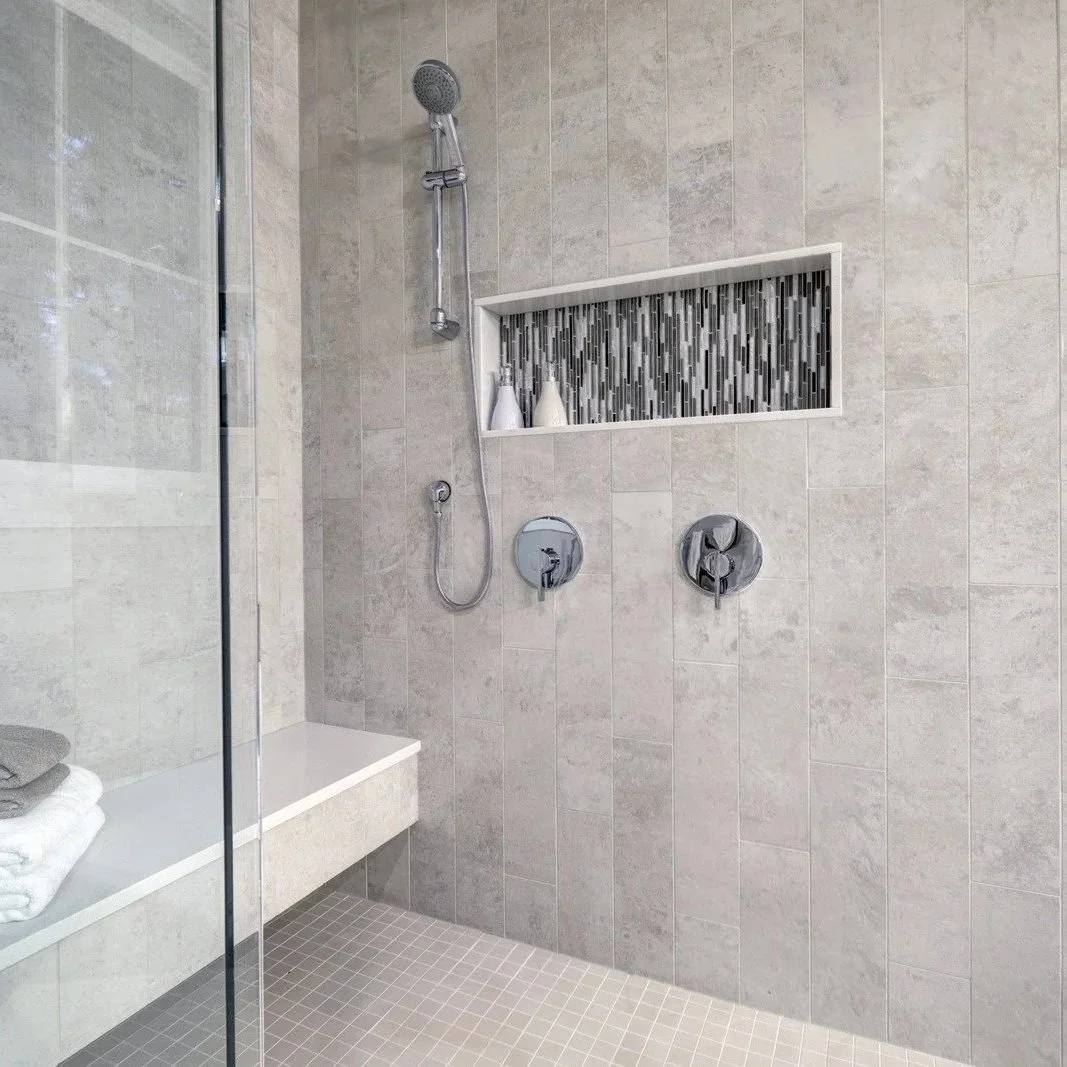
Walk-in shower plumbing in older Maine homes often requires drain relocation, framing upgrades, insulated supply routing, and water quality planning to support modern shower systems and ensure reliable long-term performance.
Walk-In Shower Plumbing in Maine Homes Has a Few Extra Wrinkles
A significant portion of Maine's residential housing was built before modern shower systems were even a design consideration. Homes from the mid-twentieth century were built around tub and shower combinations or stand-alone showers with fixed single-head configurations and minimal supply infrastructure. The floor framing in those bathrooms reflects those original assumptions: joist depth and layout were chosen for a standard tub, not for a walk-in shower that requires a specific drain depth and a floor slope that may conflict with the existing joist orientation.
In older Maine homes across communities like Brunswick, Rockland, and Augusta, walk-in shower installations often require modifications to the floor framing to accommodate the drain depth required for a curbless design. That work typically means coordination between the plumber and a carpenter, and it adds time and cost to the project that homeowners who planned only for the plumbing and tile work did not account for. Understanding that the floor structure is part of the plumbing evaluation for a walk-in shower installation prevents the budget shock of discovering mid-project that the subfloor needs to be reconfigured. A thorough pre-project assessment by an A.T Plumbing Services plumber experienced with older Maine construction catches these issues before demolition begins.
Cold Climate Considerations for Walk-In Shower Supply Plumbing
Maine winters create supply plumbing concerns for walk-in showers that are not relevant in warmer climates. A multi-outlet shower system, one with a rain showerhead, body sprays, and a hand shower, uses significantly more water volume than a standard shower. That volume demand puts a different kind of stress on well pump systems, pressure tanks, and supply lines than typical household use does. A homeowner in a Maine home on a private well who installs a high-volume walk-in shower system without assessing whether the well pump and pressure tank can sustain that demand will encounter a pressure drop during longer showers, particularly if other household fixtures are running simultaneously.
The supply lines themselves also require careful routing in Maine homes to avoid exterior walls and areas that drop below safe temperatures in winter. A walk-in shower supply plumbing that is run through an exterior wall cavity without adequate insulation is vulnerable to freezing during extreme cold snaps, and a frozen supply line inside a finished shower wall creates a serious repair situation. An experienced plumber routing supply lines for a Maine walk-in shower installation will plan the pipe path to stay in conditioned space wherever possible, add insulation to any sections that must pass through exterior or semi-conditioned areas, and locate shutoffs in accessible positions for the rare situation where seasonal concerns require isolation of the supply.
Drain Planning in Maine Homes With Older Waste Systems
Maine homes built before the 1980s often have cast iron drain and waste systems that are functional but may not be in ideal condition after decades of use. Before a walk-in shower is plumbed, the existing waste line that the shower drain will connect to should be assessed for corrosion, joint integrity, and capacity. A partially corroded cast iron stack may handle current drainage loads without obvious symptoms, but adding the flow from a walk-in shower with multiple outlets pushes more water through those connections than they currently handle, and a weakened joint that holds under light demand may fail under heavier flow.
In Maine homes where the bathroom is on the first floor above a basement, accessing the drain stack for inspection and modification is relatively straightforward. In homes where the bathroom is above an occupied or finished space, or where the stack runs through interior walls rather than an accessible chase, the routing of a new drain connection requires more planning. Linear drain configurations, which are popular in walk-in shower designs for aesthetic and floor-slope reasons, have specific requirements about how the drain body connects to the trap and waste stack. If the stack location does not align with where a linear drain would ideally sit, the design either needs to be adjusted or additional waste line routing is needed. This is exactly the kind of constraint that needs to be identified at the design stage, before the tile and glass are selected around a drain position that the plumbing cannot actually support.
Thermostatic Valves and Maine Well Water: Planning for Longevity
Walk-in showers in Maine homes that use thermostatic valve systems deserve particular attention to component selection, because thermostatic valves have precision internal mechanisms that are more sensitive to water quality than basic pressure-balancing valves. The ceramic cartridge and internal sensor components in a thermostatic valve can be affected by mineral scale from hard well water, iron deposits, and pH conditions that are common in Maine's private well supply. Installing a thermostatic valve system in a Maine home with high mineral content water without addressing water quality upstream is a setup for a valve that performs beautifully at first and then degrades within five to seven years as mineral scale accumulates in the thermostatic sensing element.
The practical step is to assess water quality before specifying the valve system and, if necessary, recommend a water softener or iron filter as part of the project scope. This conversation sometimes surprises homeowners who expected only a plumbing discussion, but it is the difference between a walk-in shower that performs reliably for twenty years and one that requires expensive valve service well before its expected service life. Homeowners in Maine who are investing in a high-end walk-in shower installation are already committing significant resources to the project. Protecting that investment through appropriate water treatment is a straightforward extension of the same logic.
