
Water Heater Replacement in Maine: Size It Right or Do It Twice
The water heater finally gave out on a January morning, which is roughly the worst time a water heater can fail in Maine. Now you are trying to make a fast decision about a replacement while the house is running on cold water and the temperature outside is in the single digits. That pressure is exactly why Maine homeowners end up with the wrong tank size, a venting configuration that creates a code issue, or a unit that technically works but cannot keep up with the added demand of a Maine winter. Water heater replacement in Maine is not a complicated project, but it has variables that matter more here than in warmer states, and getting them right at the outset is the difference between a water heater that performs for 12 years and one that disappoints from the first heating season.
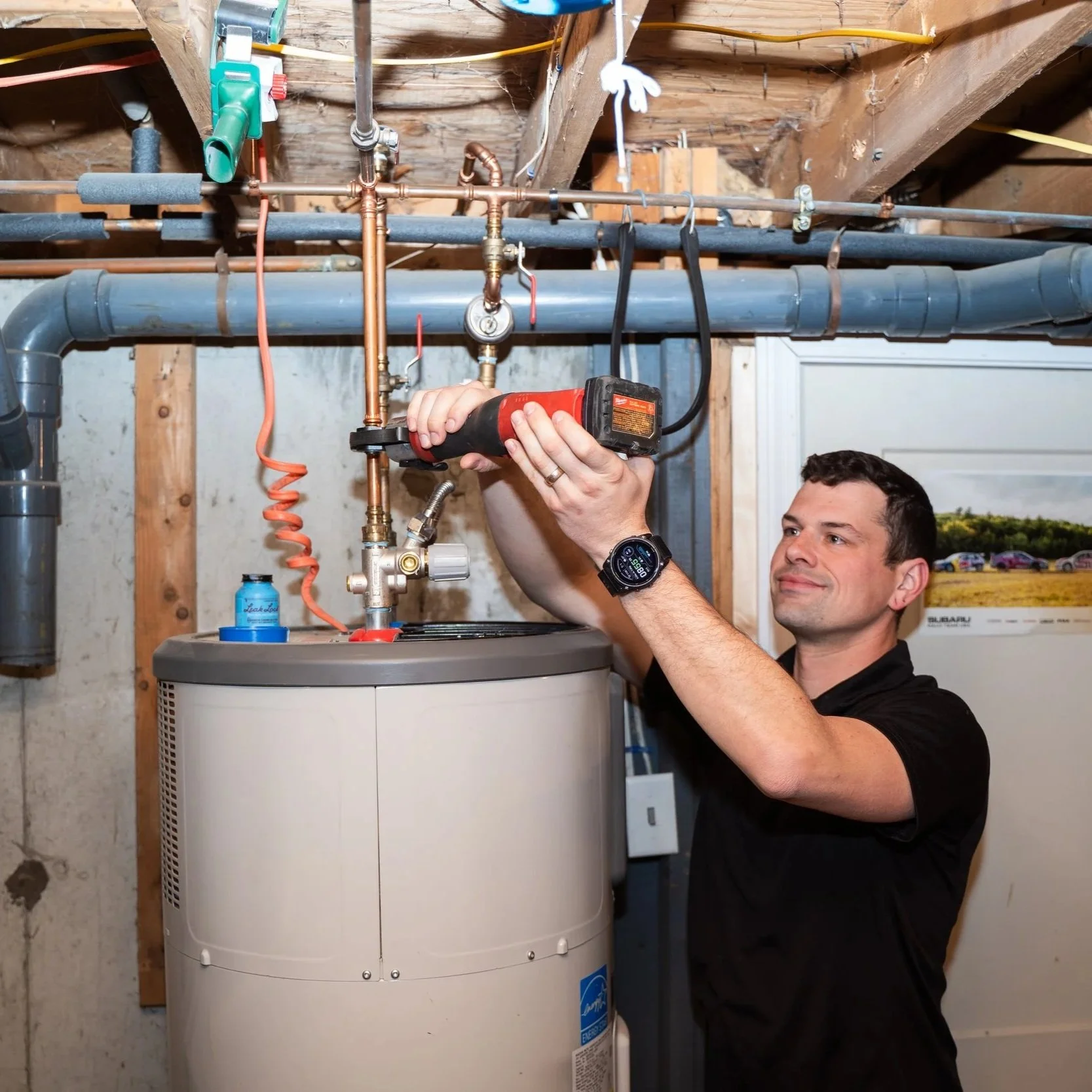
Proper water heater replacement in Maine requires correct sizing, venting evaluation, expansion tank installation, and well water considerations to ensure reliable winter hot water performance and long-term system durability.
Sizing for Maine's Winter Hot Water Demand
Hot water demand in a Maine home during winter is genuinely higher than it is during summer, and that seasonal difference should inform the tank sizing decision at replacement time. Longer showers in cold weather, more frequent use of hot water for household cleaning, and the additional demand that comes with a heating season lifestyle all push peak demand above what a household uses in warmer months. Additionally, and this is a point most homeowners do not factor in, the incoming cold water temperature in Maine during winter is significantly lower than in summer, which means the water heater has to do more thermal work to produce the same volume of hot water at the set temperature. A tank sized around summer demand in a mild climate is likely undersized for a Maine winter household.
The first-hour rating is the tank specification that matters most for sizing a replacement water heater correctly. It measures how many gallons of hot water the unit can deliver in the first hour of high-demand use, starting from a full hot tank. A tank with a 70-gallon first-hour rating will deliver adequately for most four-person Maine households during typical morning demand, but a household with multiple adults, frequent guests during ski or foliage season, or teenagers who take long showers may need a higher first-hour rating to get through the morning without running cold. A plumber assessing a water heater replacement in a Maine home should factor in winter demand patterns and the cold supply water temperature, not just the basic household size chart.
Venting Considerations for Maine Homes
Maine's housing stock, which skews older than the national average, often features venting configurations that require attention during water heater replacement. Gas water heaters in older Maine homes are frequently configured as atmospheric vent units that rely on natural draft through a metal flue pipe, sometimes shared with an oil boiler or furnace. When the old unit is replaced, the new unit's venting requirements must be assessed against the existing flue configuration. A modern high-efficiency gas water heater may use a power vent configuration rather than an atmospheric vent, which changes the flue path entirely and may require new horizontal PVC exhaust runs rather than the existing vertical metal flue.
In Maine homes where the utility room shares a flue with an oil heating system, changes to the water heater venting configuration require coordination with the heating contractor to verify that the flue is appropriately sized for the remaining connected appliance after the water heater is decoupled. An oversized flue serving only one appliance can draft poorly, creating condensation and corrosion inside the flue pipe. A plumber handling water heater replacement in a Maine home with a shared flue should flag this coordination requirement rather than completing the water heater scope in isolation.
The Well Water Factor in Maine Water Heater Replacement
A water heater replacement in a Maine home on private well water is an opportunity to assess and address the water quality conditions that shortened the previous unit's service life. If the outgoing water heater shows heavy sediment accumulation at the bottom of the tank, significant anode rod depletion, or internal corrosion that has advanced faster than expected for the unit's age, those findings indicate a water chemistry issue that will affect the new unit at the same rate unless something changes. Installing a new water heater on the same hard, iron-laden well water without addressing the water quality or adjusting the maintenance schedule is a straightforward path to repeating the same premature wear cycle.
In Maine communities throughout the central and western regions of the state, where well water hardness and iron content tend to run higher, a plumber advising on water heater replacement should discuss water quality as part of the replacement consultation. In some cases, installing a point-of-entry iron filter or water softener before the new water heater reduces the mineral load on the new unit enough to extend its service life meaningfully. When water treatment is impractical or not desired, adjusting the maintenance intervals for anode rod inspection and sediment flushing to account for the higher mineral load is the next best option. Neither approach is complicated, but both require knowing that Maine's well water is a variable that affects the replacement outcome.
Thermal Expansion and Code Compliance in Maine
Maine's plumbing code, like most state codes, requires thermal expansion accommodation in any closed water supply system. A closed system is one where a pressure-reducing valve, backflow preventer, or check valve on the main supply line prevents water from flowing back toward the utility or well when the water heater heats it, and it expands. Without an expansion tank or other pressure relief accommodation, the thermal expansion of water during each heating cycle pushes pressure throughout the supply system, stressing connections, straining the T&P valve, and gradually wearing fittings that were not designed to handle repeated pressure spikes.
Many older Maine homes have closed systems because pressure-reducing valves were installed at some point without a corresponding expansion tank being added. Water heater replacement in those homes requires an expansion tank installation as part of the scope to bring the system into code compliance. A plumber who installs a replacement water heater without assessing expansion tank requirements is completing the job incompletely from a code standpoint, leaving the homeowner with a new water heater on a system that stresses its own connections with every heating cycle. Asking about expansion tank requirements and T&P valve replacement as part of the replacement consultation is a practical step for any Maine homeowner going through this process.
What to Expect From the Replacement Process in a Maine Home
Water heater replacement in a well-prepared Maine home, where access is clear, the venting configuration is understood, and the connections are in serviceable condition, typically takes 2 to 4 hours. In homes where the replacement involves venting modifications, expansion tank installation, shut-off valve replacement, or difficult physical access due to the water heater's location in a crawl space or tight utility corner, the timeline extends accordingly. Maine homes with utility rooms that have not been updated since the original construction sometimes require shut-off valve replacement as part of the water heater scope, because the existing gate valves have not been operated in years and may be seized in the open position.
The permit and inspection process for water heater replacement in Maine varies by municipality, but it is generally required for any replacement project. A licensed plumber handles permit applications and coordinates the required inspection during installation. Unpermitted water heater replacements can create complications during home sales and may affect homeowners' insurance coverage in the event of a water-damage claim related to the new unit. Confirming that the installation includes a permit as a standard part of the scope is a practical step for any Maine homeowner, particularly those who may be planning to sell within the next few years.
