
That Shutoff Valve Under Your Sink Won't Close When You Need It
You reached under the sink to shut off the dishwasher water supply because the door seal was leaking, but the handle turned, and the water kept flowing. You turned it further, and it still flowed, and then the handle stripped off the stem, and now you are at the main shutoff, turning off water to the entire house while the dishwasher continues to drip onto the cabinet floor. Appliance shutoff valves are supply-control components designed for quickly isolating a fixture or appliance, but they fail exactly when they are needed most because they are never used at any other time. The valve that seizes in the open position after a decade of disuse is not defective. It is doing exactly what a gate valve that has never been operated in ten years does, and that outcome is entirely predictable and entirely preventable with the right valve type installed in the right location.
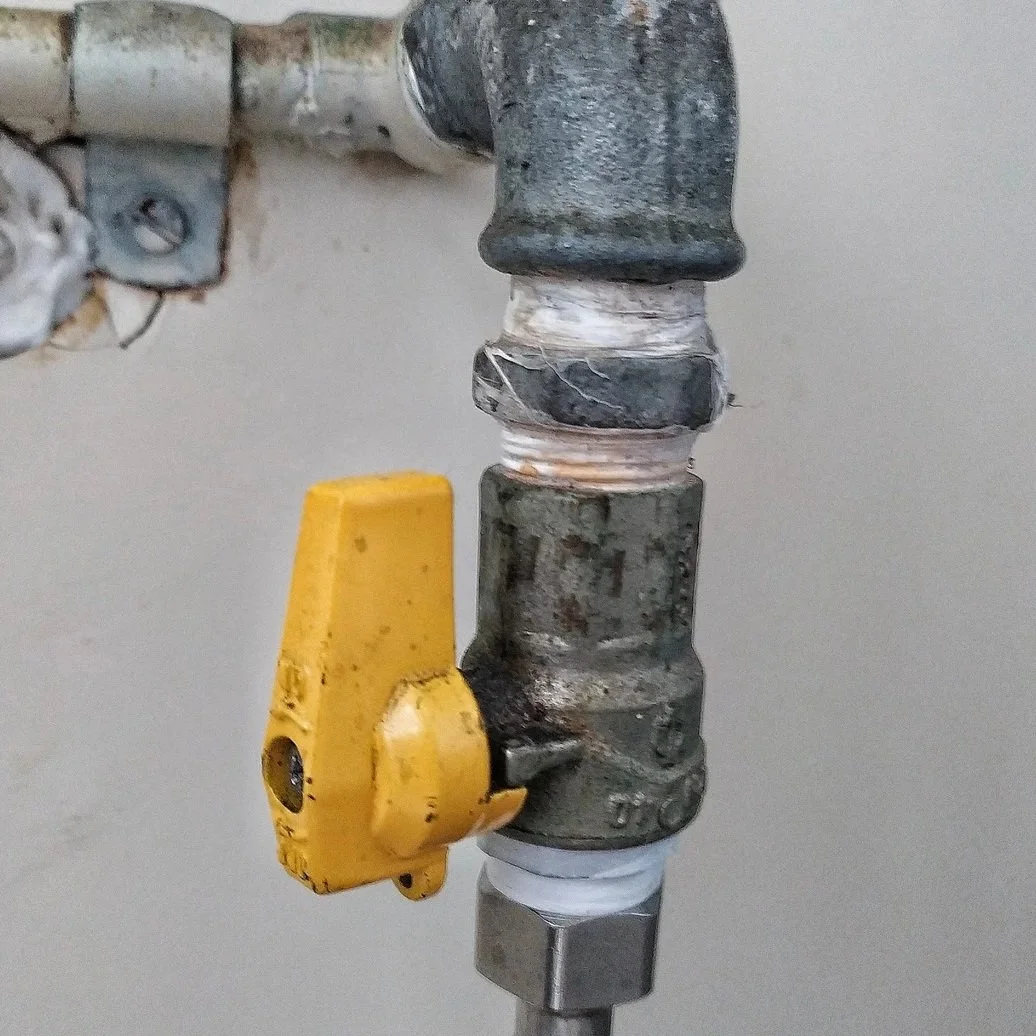
Old appliance shutoff valve with corroded plumbing connection and braided supply line highlighting common emergency plumbing failures that require reliable quarter-turn ball valve replacement for proper fixture isolation.
Why Appliance Shutoff Valves Fail and What That Failure Looks Like
Appliance shutoff valves control the supply to individual fixtures and appliances: the hot and cold valves under bathroom and kitchen sinks, the supply valve to the toilet, the valves behind the washing machine, the supply line to the refrigerator ice maker, and the valve serving the dishwasher. In most homes, these valves are installed and then left in the open position indefinitely, operated only when a problem requires isolation of that supply line. That pattern of extended disuse followed by emergency operation is exactly what causes gate-style shutoff valves to fail.
Gate valves use a gate mechanism inside the valve body that rises and lowers across the water flow path when the handle is turned. In a valve that has been in the open position for years without operation, the gate mechanism corrodes from water contact, and the stem threads that raise and lower it accumulate mineral deposits. When the valve handle is turned to close, the corroded gate may not fully cross the flow path, the stem threads may be stiff enough to limit travel, or, in severe cases, the stem may shear at the handle connection before the gate reaches the closed position. Any of those outcomes results in a valve the homeowner is turning without achieving shutoff, and the situation requires going to the main supply shutoff to stop the flow from any fixture served by that valve.
The Valve Type Difference That Determines Emergency Outcome
Replacing failed or aging gate-style shutoff valves with quarter-turn ball valves is the single most impactful appliance shutoff valve upgrade available to homeowners. A quarter-turn ball valve uses a rotating ball with a bore through its center that aligns with the flow path when the valve is open and rotates 90 degrees to block it when the valve is closed. The mechanism is simple, has very few parts that can corrode or seize, and provides complete shutoff with a single quarter turn of the handle. A ball valve that has been in the open position for fifteen years will still close cleanly and completely when the handle is turned, because the ball and seat design does not develop the same corrosion-related travel restriction that affects gate valve stems.
The visual confirmation of valve state is another practical advantage of ball valves over gate valves. A ball valve handle that is parallel to the pipe is open. A handle that is perpendicular to the pipe is closed. That immediate visual confirmation eliminates the uncertainty of a gate valve, where the only way to know whether the valve is fully closed is to operate the downstream fixture and check whether flow has stopped. In an emergency where the homeowner is trying to determine quickly whether a valve is open or closed, that visual confirmation has real practical value.
Appliance-Specific Shutoff Considerations
Different appliances and fixtures have supply configurations that affect which shutoff valve type is appropriate and how the replacement is approached. Toilet supply valves are typically located on the wall behind or below the toilet and connect to the bottom of the toilet tank via a flexible supply line. The valve is a standard compression or push-to-connect fitting into the supply line, and replacement involves shutting off the main supply, disconnecting the existing valve, and installing the new valve with the correct fitting type for the supply line material in the wall.
Under-sink valves for kitchen and bathroom supply lines may be hot side, cold side, or both, and in some sink installations, there are additional valves for a filtered water line, a dishwasher supply, or a hot water dispenser. Each of these valves should be assessed individually and replaced if it is a gate-style valve or if it shows any sign of corrosion, mineral buildup at the packing nut, or difficulty operating. At A.T Plumbing Services, appliance shutoff valve replacement projects often involve replacing multiple valves in a single service visit, because the labor of shutting off the main supply and accessing the valve locations is shared across all replacements, making the per-valve cost of addressing the full inventory more efficient than replacing them one at a time as each fails.
Refrigerator Ice Maker and Water Dispenser Supply Lines
The supply line to a refrigerator ice maker or water dispenser is one of the most commonly neglected supply connections in a home, and the shutoff valve serving it is often a small saddle valve or compression valve installed when the refrigerator was first installed and has not been examined since. Saddle valves, which clamp onto an existing supply line and pierce it with a needle to tap into the supply, are considered a low-quality installation method by most plumbing codes and present specific failure risks. The needle penetration into the existing supply line is a small opening that can develop mineral deposits, and the saddle clamp can loosen over time, producing a leak at the clamp rather than through the needle.
Replacing a saddle valve connection to a refrigerator supply line with a proper tee fitting and a dedicated ball valve shutoff is the correct installation approach, providing a more reliable supply connection and a shutoff valve that actually functions. The tee fitting requires soldering or press-fitting into the existing supply line, which is a plumbing task rather than a hardware store installation. The result is a supply connection that does not rely on a pierced needle through an existing pipe wall, a shutoff valve that closes cleanly when needed, and a supply line to the refrigerator that is not creating a stress concentration in the existing pipe it taps from.
Pressure and Flow Considerations After Valve Replacement
When multiple appliance shutoff valves are replaced in a home during a single service visit, the pressure test after restoration of the main supply is a step that confirms all new connections are sealed, and all valves are functioning correctly before the service is considered complete. A new valve that was installed with insufficient thread sealant, or a compression fitting that was not seated correctly, may not show a leak under low flow but will seep under full supply pressure. Holding the system under full operating pressure and observing each new valve installation for a brief period catches these issues while the plumber is still on site and the connections are still accessible.
Flow restriction through an appliance shutoff valve can be a symptom of partial closure, mineral accumulation in the valve body of an old gate valve, or an undersized valve relative to the supply line diameter it is serving. A homeowner who has noticed reduced pressure or flow at a specific fixture for years may attribute the issue to the fixture itself, when the actual cause is a partially closed or scaled gate valve upstream of the fixture. Replacing those valves with properly sized ball valves often resolves longstanding pressure complaints without any work on the fixture itself.
