
Dual Vanity Plumbing in Maine Homes: What the Wall Conditions Change
The bathroom renovation plan calls for a new double vanity where a single pedestal sink stood for the last 40 years, and the upgrade looks straightforward on the plans. Two sinks, two faucets, one drain wall. Then the plumber opens the wall to assess the existing rough-in and finds galvanized steel supply lines with significant internal scale, reducing the effective supply diameter, a single vent pipe in the wall that was sized for one sink, and a drain stub-out that is positioned six inches off center relative to where the new dual vanity cabinet needs it to be. In Maine, that combination of conditions behind an older bathroom wall is common enough that planning a dual vanity installation without a pre-project rough-in assessment is a reliable way to discover mid-project complications that were entirely predictable.
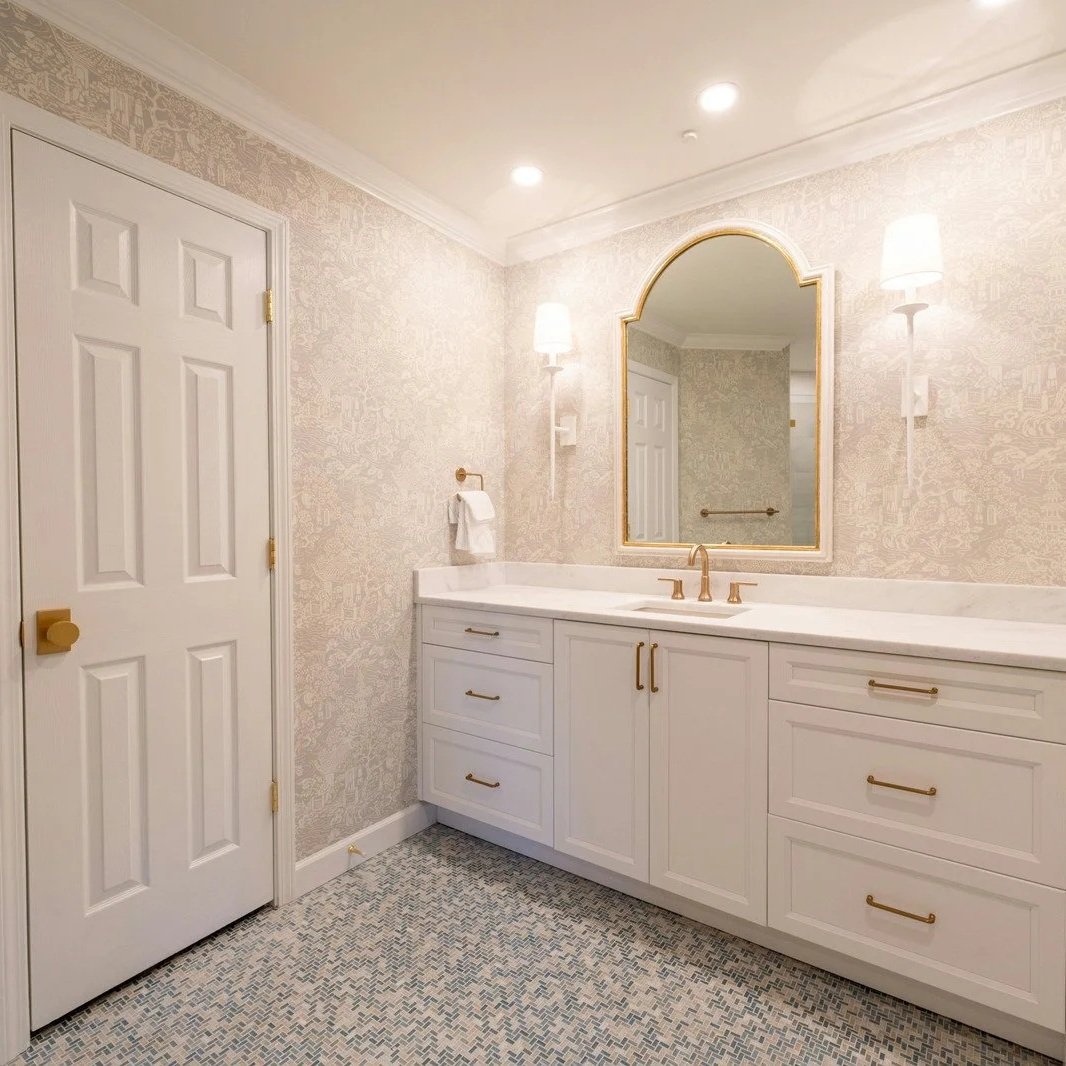
Dual vanity plumbing installation in Maine bathroom featuring modern sink connections, updated drain configuration, improved supply lines, and coordinated wall rough-in work designed for reliable long-term bathroom performance.
What Maine's Older Bathroom Walls Contain
The supply infrastructure within a Maine bathroom wall that has not been updated since the home was built often reflects the materials and standards of the original construction, rather than the requirements of a modern dual-vanity installation. Galvanized steel supply lines from the mid-twentieth century, which are present in a meaningful portion of Maine's older housing stock, have been accumulating internal mineral scale from decades of contact with hard well water. That scale reduces the effective supply diameter progressively over time, and a galvanized supply line that is nominally half-inch may be delivering the flow of a three-eighths-inch line after decades of scale buildup.
Adding a second sink to a supply branch from a galvanized line in this condition divides the already-restricted flow between two fixtures, producing pressure at both faucets that is noticeably lower than what either sink would have with a dedicated, clean supply. A dual-vanity installation in a Maine home with original galvanized supply lines is an opportunity to replace those lines with new copper or cross-linked polyethylene tubing, providing full-bore supply capacity to both sinks. That supply line replacement adds scope to the project but produces a result where both sinks perform well rather than both performing poorly, and it eliminates the galvanized supply failure that is coming regardless of the vanity installation.
Venting for a Second Drain in Maine's Older Bathrooms
Bathroom venting in Maine's older homes is frequently minimal, sized for the original fixture count and configuration, and not intended to accommodate additional fixtures. A single bathroom sink that was vented with a single vent pipe through the wall behind it is vented adequately for one drain. Adding a second sink in a dual vanity configuration creates a second drain that also requires adequate venting, and the existing single vent pipe may or may not serve both drains effectively, depending on its size, the distance between the two drain connections, and the configuration of the continuous waste or shared drain assembly.
In Maine homes where the bathroom vent connects to a vent stack that runs through the floor above or the wall adjacent to the bathroom, adding a vent connection for the second drain may require running new pipe through wall cavities that contain plaster over wood lath, original insulation, or blocking that restricts the routing path. A plumber assessing a dual vanity installation in an older bathroom in Maine will trace the existing vent path and determine whether the existing vent can serve the second drain through a code-compliant shared configuration, or whether a new vent connection needs to be run, which adds scope and potentially wall access to the project. At A.T Plumbing Services, the vent configuration assessment is conducted before the dual vanity installation is quoted, as venting requirements are among the more significant scope variables in older bathroom plumbing in Maine.
Drain Stub-Out Position and Cabinet Compatibility in Maine Homes
The drain stub-out position in an older Maine bathroom reflects the geometry of the original single-sink installation, and that position may not be compatible with a new dual vanity cabinet without modification. A single sink pedestal or vanity cabinet typically has its drain stub-out near the center of the cabinet's footprint or toward one side, depending on the original fixture configuration. A new dual vanity cabinet with two sinks may have its drain assembly center at a different position than the existing stub-out, requiring either relocating the stub-out in the wall or designing the drain assembly to reach the existing stub-out from the new cabinet geometry.
Stub-out relocation inside a Maine bathroom wall involves opening the wall at the stub-out location, cutting and repositioning the drain pipe connection, and patching the wall after the new stub-out position is established. In a bathroom where the wall surface is original plaster over lath, that patch involves plastering rather than standard drywall repair, which adds complexity. Alternatively, designing the continuous waste drain assembly to span the distance from the new sink drain positions to the existing stub-out location may be achievable if the stub-out is within reach of the drain assembly dimensions at an adequate slope. A plumber can determine which approach is more practical based on the specific geometry of the new cabinet and the existing stub-out position before any work begins.
Hard Well Water and Dual Vanity Faucet Component Longevity in Maine
The same hard well water conditions that shorten shower valve cartridge life and accelerate faucet wear in Maine homes also affect the components in a new dual vanity faucet installation. Two faucets installed in a Maine well-water home represent twice the component surface area exposed to the mineral content of the supply, and the fill valves, drain stoppers, and supply line gaskets for both sinks will wear on the same accelerated schedule as any other fixture in the home if the water quality is not addressed.
Homeowners investing in a higher-end dual-vanity installation in a Maine home should consider the faucet specification with water chemistry in mind. Faucets with ceramic disc cartridges, which resist mineral deposit adhesion better than rubber seat designs, perform better in Maine's hard well water conditions. Faucet finishes that are easier to clean and more resistant to mineral spotting, such as brushed nickel or polished chrome, reduce the maintenance burden that iron-bearing Maine well water creates on more textured finishes. These are selection details that a plumber installing the dual vanity can advise on based on experience with similar installations in the local water chemistry conditions, and they produce a vanity installation that looks better and requires less maintenance over its service life.
The Under-Vanity Space That Maine Homeowners Underestimate
A dual vanity cabinet in an older bathroom in Maine needs to provide adequate interior space for the supply branches, shutoff valves, drain assembly, and P-trap configuration that serves two sinks. Maine homeowners who select a dual-vanity cabinet based on its exterior dimensions and interior storage capacity, without accounting for the plumbing space requirements, frequently discover at installation that the cabinet interior is less practical than anticipated because the plumbing components occupy a significant portion of the space between the sink drains and the cabinet floor.
The continuous waste drain assembly for two sinks, when configured correctly at an adequate slope to the wall stub-out, occupies the full lateral span between the two sink drains and a vertical drop of several inches below the drain tailpieces. The supply branches and shutoff valves for both hot and cold connections to each faucet occupy additional space at the back of the cabinet. The remaining space below the drain assembly is the practical storage volume, and in a cabinet that is not sized generously, that remaining volume is less than the homeowner expected based on looking at the empty cabinet. A plumber and a designer discussing cabinet selection before the cabinet is ordered can confirm that the interior dimensions support both the plumbing configuration and the intended storage use, resulting in a better outcome than discovering the conflict after the cabinet is installed.
