
Kitchen Sink Relocation in Maine: What the Floor Hides
The kitchen renovation plan is solid, the island position is confirmed, and the sink is moving from the exterior wall to the center of the room. The cabinet designer said it was possible. The contractor said he has done it before. Then the floor comes up, and what is under it is a cast iron drain system from 1962 with the stack running through the exterior wall directly behind where the old sink was, which means the new island location is twelve feet from the stack, and the floor joists between the island and the stack are only eight inches deep. The drain run from the new location needs a three-inch drop over twelve feet at a minimum slope, and three inches of drop is not available in eight inches of joist depth when the subfloor, any mechanical runs already present, and the minimum structural clearance for boring or notching are accounted for. The project is paused while everyone figures out whether to move the island, drop the basement ceiling below, or build a soffit. In Maine, that is not an unusual story, and it plays out more often than it should because the drain routing assessment did not happen before the renovation design was finalized.
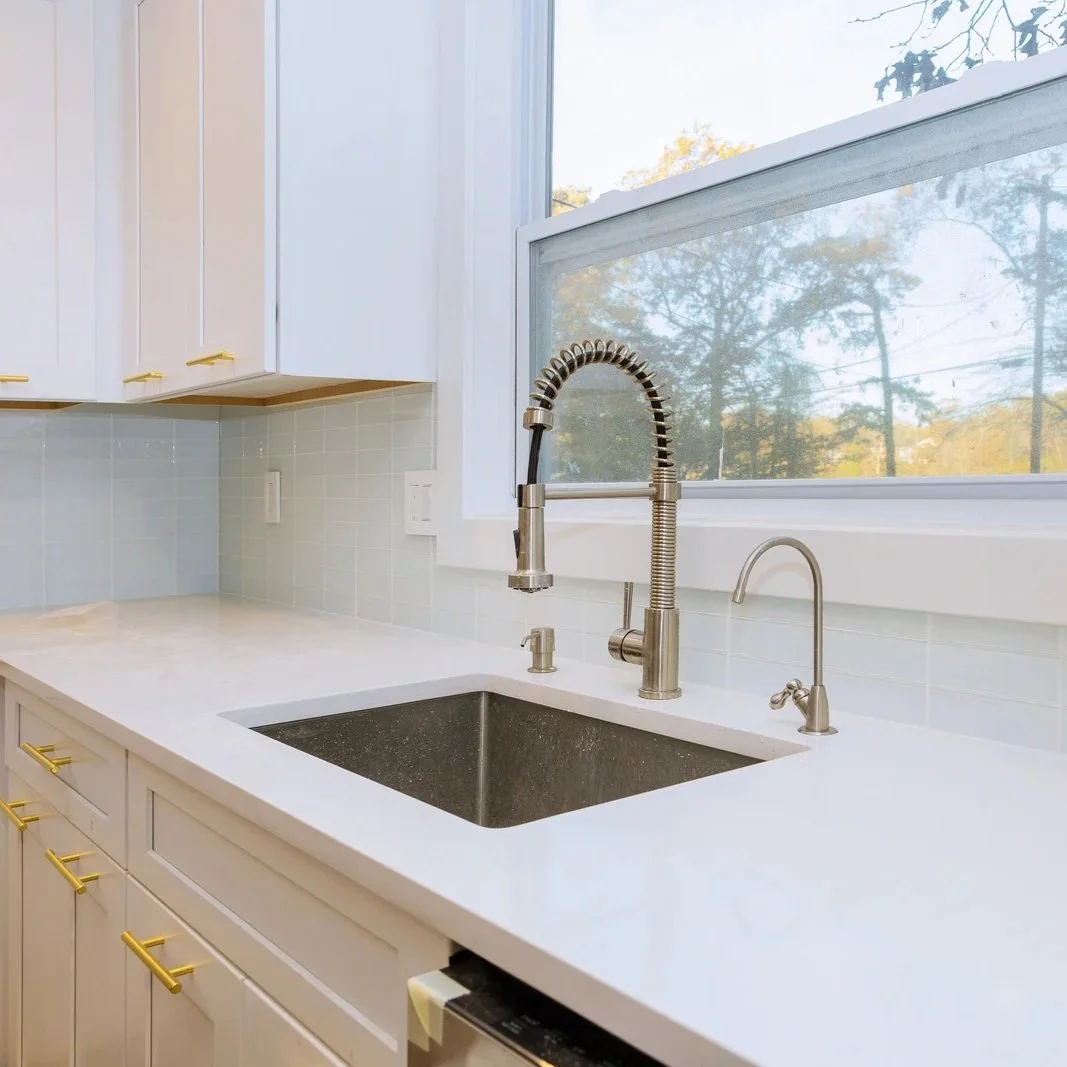
Modern kitchen sink relocation with pull-down faucet, filtered water tap, and updated plumbing layout designed for efficient drain routing and reliable supply connections in Maine kitchen renovation projects.
Maine's Aging Kitchen Drain Systems and What They Reveal
A meaningful portion of Maine's residential kitchen drain systems are original cast iron installations from the mid-twentieth century. In homes throughout communities in southern Maine, the Midcoast region, and central Maine, the cast iron stack and branch drain connections that serve the kitchen have been in continuous service for fifty years or more. Those systems are often functional, but they are not always in a condition that makes reconfiguring around them straightforward. A cast iron drain pipe that has been in service for fifty years has interior corrosion that reduces the effective diameter and creates a rougher internal surface than the original, which affects drain flow velocity and increases the likelihood of debris accumulation in the drain line.
When a kitchen sink is being relocated in a Maine home with an original cast iron drain system, the condition of the connection point for the new drain branch to the existing stack needs to be assessed before it is disturbed. A cast iron stack that is intact and serviceable is an adequate connection point for a new PVC branch connection using a rubber Fernco coupling. A cast iron stack with significant corrosion, thin walls from decades of internal oxidation, or cracking at the hub joints may not provide a reliable connection point for the new branch, and the section being connected to may need to be repaired or replaced as part of the relocation scope. That finding is better identified during the pre-project assessment than during the demolition phase when the timeline is locked in and the budget is committed.
Drain Slope and Maine's Floor Framing Realities
The drain slope constraint for a kitchen sink relocation in Maine is the same as anywhere, one quarter inch of fall per foot of horizontal run, but Maine's older housing stock makes the constraint harder to work with because the floor framing in older Maine homes was built for structural adequacy at the time of construction, not for the plumbing routing flexibility that a kitchen renovation might later require. Platform-framed homes from the mid-twentieth century typically have eight-inch nominal joists, which provide roughly 7.5 inches of actual depth. Balloon-framed homes, which are more common in Maine than in newer housing markets due to the age of the state's housing inventory, have a different structural configuration that affects how horizontal drain runs can be routed through the floor assembly.
The practical depth available for a horizontal drain run through a floor assembly is the joist depth minus the subfloor clearance, minus any existing mechanical runs in the bay, and minus the required structural margin for boring through the joist. In a Maine home with eight-inch joists, carrying a drain run of 12 feet at a minimum slope, the available depth for a four-inch drain pipe after accounting for required clearances may be marginal. When the drain run exceeds the distance that the available framing depth can serve at minimum slope, the options are to modify the framing by sistering joists at a lower elevation, to route the drain below the framing in a dropped soffit visible from the basement below, or to reconsider the proposed sink location in relation to the stack position. All three options have cost and construction implications that belong in the pre-project conversation, not in the middle of demolition.
Supply Line Routing Challenges in Older Maine Kitchens
Supply line routing for a relocated Maine kitchen sink has a set of challenges specific to the state's housing conditions. In a Maine home with a full basement below the kitchen, routing supply lines from the existing supply location to the new sink position below the floor is the most practical approach and is straightforward in a home with accessible basement ceiling space. In Maine, homes with crawl space foundations require routing supply lines to a new island location, which may involve running lines through a crawl space with limited clearance, variable moisture conditions, and, in uninsulated crawl spaces, freeze exposure that makes the routing path thermally problematic.
Supply lines routed through an uninsulated Maine crawl space to a kitchen island need to be insulated and, in some cases, run within the conditioned floor assembly rather than through the crawl space air, which requires coordinating the supply routing with the floor insulation and vapor barrier conditions. A supply line running through a cold Maine crawl space without adequate insulation is a risk of a frozen pipe during a January cold snap, and a frozen kitchen supply line inside the floor assembly is a repair scenario that requires opening the finished floor surface. At A.T Plumbing Services, supply line routing for kitchen sink relocations in Maine homes includes a freeze risk assessment for any portion of the supply path that passes through unconditioned space, because addressing that risk at the routing planning stage is far less costly than dealing with a freeze event after the kitchen is completed.
The Old Sink Location: Closing Off Maine's Older Connections
When a kitchen sink is relocated in a Maine home with an original drain system, closing off the old sink's drain connection at the stack requires the same attention to the cast-iron condition at that connection point as the new branch connection does. The old branch connection may be a lead-wiped joint or a hub-and-spigot fitting that was sealed with lead and oakum, and removing or capping that connection without damaging the stack requires careful work. Cutting into an aging cast iron stack to cap an old branch connection can reveal wall thickness that is lower than expected from external inspection, which means the section being worked on needs to be assessed before the full scope of the cap-off is known.
In Maine homes where the old sink connection is being closed off as part of a kitchen renovation that is also replacing other elements of the drain system, coordinating the cap-off work with the larger drain replacement scope makes sense from a cost and access standpoint. A plumber closing off the old kitchen drain connection in a Maine home with a marginal cast iron stack may identify that the section of stack adjacent to the connection point needs replacement, and addressing it during the kitchen renovation, while the access is already available, is more economical than returning to it separately when a different part of the system fails.
Permit and Inspection Requirements for Maine Kitchen Sink Relocation
Kitchen sink relocation in Maine requires a plumbing permit in virtually all municipalities, and the scope that triggers that permit, changes to the drain, waste, and vent system, is exactly what a sink relocation involves. The rough-in inspection, which must be passed before the drain work is covered by finished floor and wall surfaces, confirms that the drain slope meets code requirements, the vent connection is adequate, the new drain connection to the stack is correctly made, and all supply connections are properly fitted and pressure tested.
Homeowners who have had kitchen sink relocations done without permits in a previous renovation may discover that the unpermitted drain work does not meet current code when a plumber assesses the system for a new renovation. In that case, bringing the existing drain configuration into compliance may be required as part of the new scope. Understanding the permit requirements and the inspection sequence before the renovation begins allows the plumbing scope to be correctly sequenced with the construction work and avoids the situation of a finished floor that needs to be opened for a required rough-in inspection that was not scheduled before the floor was closed.
