
Faucet Replacement in Maine Homes: The Fit Issues Nobody Warns You About
You bought the faucet, watched the install video, turned off the water, and got under the sink. The shut-off valve does not fully close, the supply lines on the old faucet are a different connection type than the new one, and the hole spacing on the sink is four and a half inches instead of the standard four, which means the deck plate on the new center set faucet does not cover the old holes completely. In an older Maine home, faucet replacement consistently reveals conditions that are not visible from above the sink. The faucet itself is fine. The installation context it needs to fit into is the part that creates the complications, and in a Maine home with plumbing last serviced in the 1980s, those conditions are common enough that a plumber who works regularly in older Maine homes expects them rather than being surprised by them.
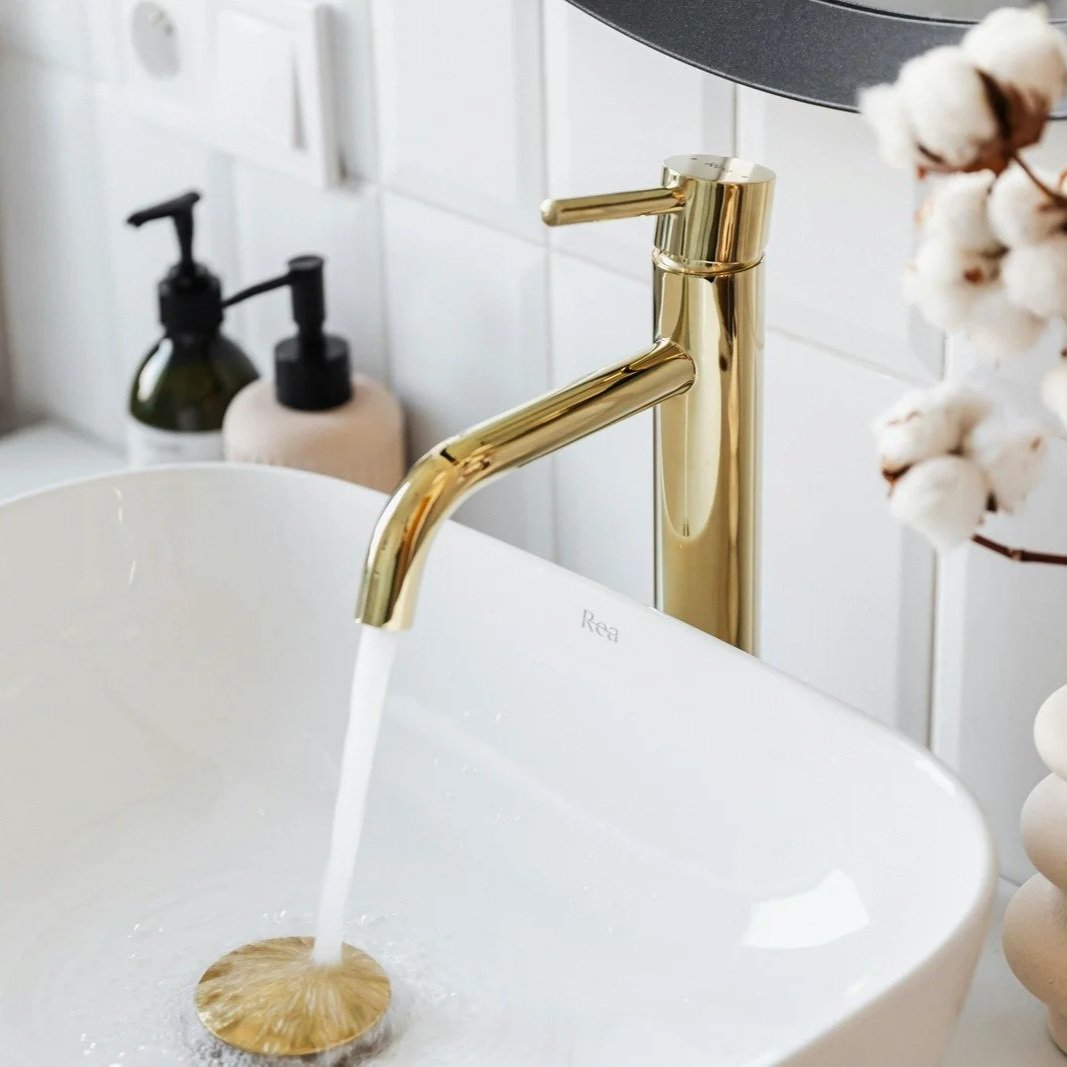
Faucet replacement in older Maine homes often reveals outdated shut-off valves, incompatible sink hole spacing, and aging supply connections that require plumbing updates for proper installation, reliable water flow, and long-term fixture performance.
What Older Maine Homes Have Under the Sink
Bathroom and kitchen sinks in Maine homes built before 1990 frequently have shut-off valves and supply configurations that reflect the materials and standards of the era when they were installed, not the connection types and sizing that modern replacement faucets assume. Older gate-style shut-off valves with compression fittings connecting to galvanized or early copper supply lines are common in Maine homes from the mid-twentieth century, and those valves have characteristics that create complications at faucet replacement time. A gate valve that has not been operated in fifteen years may only partially close when the handle is turned, which means the supply cannot be fully isolated for the faucet work without shutting off water to the entire house.
The supply lines in older Maine sink installations are frequently rigid copper stub-outs rather than the flexible braided stainless hoses that modern faucets assume will be present. A new faucet that ships with flexible supply lines for a quick connection to the shut-off may not connect cleanly to a rigid copper stub-out without an adapter fitting or a transition to flexible supply. This is not an insurmountable compatibility issue, but it is one that needs to be identified and addressed before the old faucet comes off and the supply is disconnected, because at that point, the house is without water to those fixtures until the connection is resolved. A plumber replacing a faucet in an older Maine home will assess the shut-off valve and supply configuration before disconnecting anything, keeping the project under control rather than in reactive mode.
Sink Hole Configurations in Older Maine Bathrooms
The sink hole configurations in Maine's older bathrooms do not always conform to the standard dimensions that modern faucet manufacturers design for. Older bathroom sinks were manufactured with hole spacings that varied by manufacturer and era, and a sink with holes slightly wider or narrower than the standard four-inch center-to-center measurement will not accept a standard center-set faucet deck plate without gaps. In some older Maine bathroom sinks, the holes were drilled in the field at the time of installation, and the spacing reflects the judgment of the original plumber rather than a manufacturer's standard.
When a Maine homeowner replaces a faucet in an older bathroom and discovers that the new faucet's base or deck plate does not cover the existing hole configuration cleanly, the options are to find a faucet with a larger deck plate coverage area, to use individual hole covers for the gaps, or to replace the sink at the same time as the faucet. The third option sounds like escalation, but in Maine homes where the sink is original to a bathroom from the 1960s or 1970s, the sink may be at or past its practical service life anyway, and addressing both the sink and the faucet during the same project produces a finished result that looks intentional rather than patched together.
Water Quality and Faucet Selection for Maine Well-Water Homes
Faucet selection for a Maine home on private well water should account for the mineral content and water chemistry of the supply, because some faucet finishes and some internal cartridge designs perform better in high-mineral water conditions than others. Chrome and brushed nickel finishes tend to show mineral water spotting less severely than oil-rubbed bronze or matte black finishes, which can develop visible mineral deposits on their surface texture that are difficult to clean without affecting the finish. This is a cosmetic consideration, but it affects the daily appearance and maintenance burden of the replacement faucet for as long as it is in service.
Internal cartridge selection matters for Maine well-water homes in the same way it does for faucet repair. Ceramic disc cartridges, which are standard in many mid-range and higher-end faucet products, perform better in high-mineral water conditions than rubber seat designs because ceramic is harder and less susceptible to mineral deposit adhesion on the disc surfaces. A faucet with a ceramic disc cartridge in a Maine home with hard well water will maintain smoother operation and a longer service life between cartridge replacements than the same-price-point faucet with a rubber seat design. At A.T Plumbing Services, faucet replacement recommendations for Maine well-water homes include cartridge type as a selection factor alongside finish, configuration, and price, because the cartridge type determines how well the faucet will hold up in the specific water conditions of the installation.
Frost-Free Sillcock Replacement for Maine's Exterior Faucets
Outdoor faucet replacement in Maine is a service that offers a climate-specific solution, unlike interior faucet replacement. Any outdoor faucet on a Maine home that is a standard hose bib positioned at the exterior wall face, rather than a frost-free sillcock with the shut-off point inside the wall, is a seasonal repair waiting to happen. Standard hose bibs freeze during Maine winters, and the internal vacuum breaker or faucet body cracks under freeze pressure, producing a leak that is often not discovered until the outdoor faucet is used for the first time in spring and water appears behind the siding rather than from the spout.
Replacing a standard hose bib with a frost-free sillcock in a Maine home is a straightforward project that requires accessing the pipe connection inside the wall, removing the old faucet, and installing the new frost-free unit at the correct depth to position the shut-off inside the conditioned wall. The installation depth needs to be correct for the home's specific wall thickness, because a frost-free sillcock installed at the wrong depth either does not drain correctly when shut off, defeating the freeze protection design, or protrudes by the wrong length relative to the exterior wall surface. A plumber replacing outdoor faucets in Maine homes selects the correct stem length for the specific wall thickness and confirms the installation orientation is pitched slightly downward toward the exterior, which is the slope the frost-free design requires to drain the stem when the faucet is closed.
Replacing Kitchen Faucets in Maine's Older Kitchens
Kitchen faucet replacement in a Maine home where the kitchen has not been updated since the 1970s or 1980s involves kitchen sink configurations that may not be compatible with the modern pull-down or pull-out faucets that homeowners typically want as replacements. Older Maine kitchen sinks were frequently configured for three or four-hole deck-mounted faucets with separate hot and cold handles and a center spout, plus a side spray in the fourth hole. A modern single-handle pull-down kitchen faucet designed for a one-hole installation does not fill the three existing holes in the sink deck without a deck plate that may not match the available faucet selection.
In Maine kitchens where the sink is being retained while only the faucet is replaced, the hole configuration of the existing sink needs to drive the faucet selection rather than the other way around. If the homeowner strongly prefers a single-handle pull-down configuration and the existing sink has three holes, the options include finding a pull-down faucet that ships with a three-hole deck plate, using individual hole covers for the unused openings, or accepting that the full upgrade vision requires replacing the sink as well as the faucet. That conversation is better had at the planning stage, before a new faucet has been purchased based on aesthetics alone, than during installation when the incompatibility is discovered and the options narrow.
