
Tank Water Heater Installation Done Wrong Costs Years of Problems
You had a new tank water heater installed six months ago, and the hot water is still not what you expected. The recovery time feels slow, the water never quite reaches the temperature the old unit managed, and there is a pressure drop at the showerhead when the tank is cycling. None of those problems is the water heater's fault. All of them are installation problems: a tank that was not sized correctly for the household, a supply configuration that restricts flow, or a thermostat setting that was left at a factory default that does not match the household's needs. Tank water heater installation is one of those jobs that look complete from the outside but are not complete in the ways that determine daily performance. Understanding what a proper installation actually involves changes what you look for and what questions you ask before the job is done.
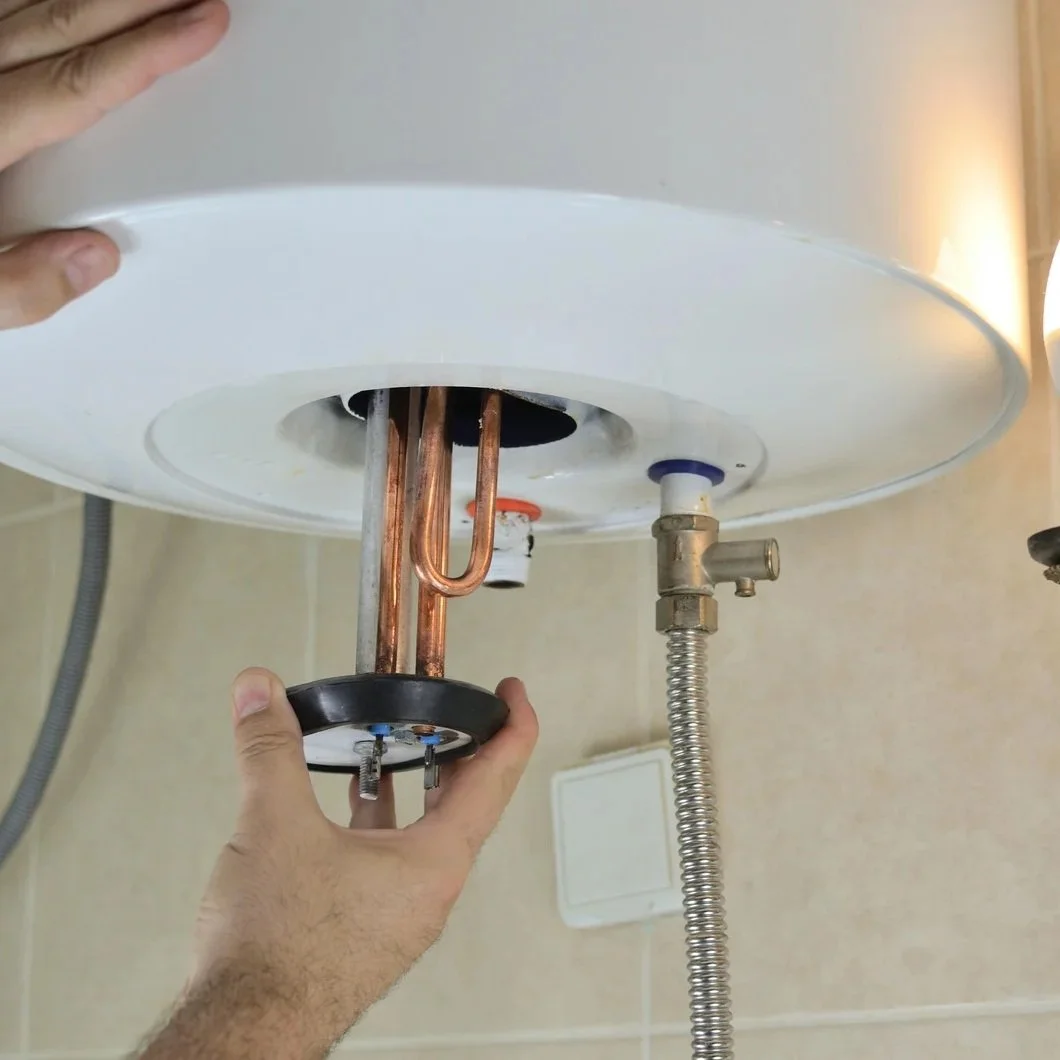
Proper tank water heater installation requires correct sizing, secure supply connections, thermal expansion protection, and safe venting to deliver reliable hot water performance while preventing leaks, pressure issues, and premature system failure.
The Installation Decisions That Determine Long-Term Performance
A tank water heater installation that performs well for its full expected service life begins with decisions that are made before the unit is physically placed: tank capacity, fuel type, first-hour rating, energy factor, and venting configuration. These are not specifications that can be easily changed after the unit is installed, which is why getting them right at the outset matters more than any individual step in the physical installation process. An undersized tank will run its heating element or burner nearly continuously during peak demand, dramatically shortening the component's service life compared to a correctly sized unit that reaches temperature and holds it with normal cycling.
The first-hour rating is the tank specification homeowners should focus on rather than tank capacity in gallons. A 50-gallon tank with a strong first-hour rating of 70 gallons can outperform a 60-gallon tank with a lower first-hour rating during a high-demand morning, because the first-hour rating accounts for the combination of stored volume and recovery rate. A plumber performing a tank water heater installation should calculate the household's peak demand and match the first-hour rating accordingly, not simply replace the previous unit's gallon capacity with the nearest available equivalent.
Proper Supply and Return Connections: Where Installations Fall Short
The supply and return connections on a tank water heater installation are where performance problems and leak risks are introduced most often in field installations. The cold water inlet should have a functioning shut-off valve that can fully isolate the tank for future service without shutting off water to the rest of the house. If the existing shut-off valve is a gate-style valve that has not been operated in years, it should be replaced with a ball valve as part of the installation. A gate valve that seizes in the open position leaves the homeowner without local water control if a supply connection fails or if future service requires draining the tank.
Flexible connectors or copper stub-outs connecting the tank to the supply lines must be the correct diameter and length for the installation, rated for the water temperature they will contact, and installed with appropriate fittings that match the tank connections. Using flexible connectors that are too short puts stress on the fittings at each end, and using connectors that are underrated for temperature can result in connector failure well before the tank's own service life is reached. Dielectric unions should be installed wherever dissimilar metals meet in the connection pathway, such as where copper supply lines connect to steel tank nipples, because without dielectric separation, galvanic corrosion at the joint can fail the fitting in a fraction of the time the connection would otherwise last.
Thermal Expansion: The Code Requirement Most Installations Miss
Thermal expansion accommodation is one of the most frequently omitted elements in residential tank water heater installations, and its absence creates ongoing stress on every pressure-related component in the water supply system. When water is heated in a closed system, it expands. In an open system, that expansion moves back toward the utility supply or well. In a closed system, which is any system with a pressure-reducing valve, backflow preventer, or check valve on the supply side, there is nowhere for the expanded water to go except into the supply piping. The result is a pressure spike with every heating cycle that pushes against supply connections, the T&P valve, and every fixture and fitting in the household supply system.
A properly installed thermal expansion tank, sized appropriately for the water heater's tank volume and the supply pressure, absorbs that expansion within a sealed air bladder and releases it as the system pressure normalizes. Installing a thermal expansion tank as part of a tank water heater installation is a code requirement in most jurisdictions for closed systems, and it is a performance and longevity measure that pays for itself by reducing stress-related wear on connections throughout the system. A tank water heater installation that does not include an expansion tank assessment and installation where required is incomplete from a code compliance standpoint and leaves the homeowner with a system that is wearing itself down from the inside every time the heating cycle runs.
Anode Rod Condition and Initial Maintenance Setup
A brand-new tank water heater comes from the factory with an anode rod installed, but the condition of that rod and the appropriateness of its material for the local water chemistry is something that should be assessed at installation time rather than left to default. In homes with high sulfur content in the water supply, a standard magnesium anode rod will produce a hydrogen sulfide reaction that results in a rotten egg smell in the hot water from the first day of operation. Replacing the magnesium rod with a zinc-aluminum alloy rod before the unit goes into service prevents this problem entirely, rather than requiring a service call after the homeowner has already been living with the smell.
Setting the water heater thermostat correctly at installation is another detail that affects both performance and safety. The default factory setting is typically 120 degrees Fahrenheit, which is appropriate for most households and minimizes the risk of scalding at the tap. However, households with immunocompromised members may benefit from a higher setting of 140 degrees, combined with a tempering valve at the point of use to prevent scalding at the fixture level. Households with a dishwasher that does not have its own heating element may also need a higher thermostat setting to achieve sanitizing temperatures. These are installation-phase decisions that a plumber should discuss with the homeowner rather than setting the thermostat at a default and moving on.
Venting, Combustion Air, and the Safety Factors That Matter
For gas tank water heater installations, venting and combustion air supply are the safety-critical elements that require the most careful assessment. An atmospheric vent gas water heater requires adequate draft through the flue to exhaust combustion products safely. That draft depends on the flue height, the flue diameter relative to the unit's BTU output, and the availability of combustion air in the installation space. A gas water heater installed in a tight utility room that has been weatherized without a combustion air source will struggle to draft properly, potentially causing backdrafting of combustion gases into the living space.
Power vent gas water heaters solve the combustion air problem by using a blower to push exhaust through horizontal PVC runs rather than relying on natural draft, but they introduce a new requirement: electrical power at the unit location for the blower motor. An installation that places a power vent unit in a space without a nearby electrical circuit, or that routes the PVC exhaust through a path that does not meet the manufacturer's length and bend specifications, produces a unit that either does not meet code or that trips its safety switch under demand conditions. Verifying that the venting configuration is correctly executed before the installation is considered complete is a basic quality standard in gas water heater installation that distinguishes a professional result from a technically functional but risky one.
