
How to Build an Outdoor Shower That Survives a Freezing Winter
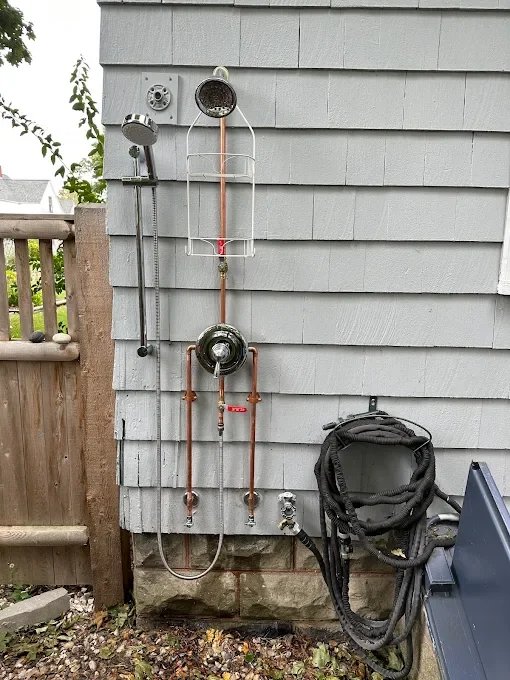
The first warm weekend after a long winter, you twist the handle on the outdoor shower and nothing comes out, or worse, water sprays from a split somewhere in the wall and runs down the siding. It happened over the winter, while the house sat quiet and the temperature dropped below freezing for weeks at a stretch. That burst line is the single most common way an outdoor shower dies, and it's almost always avoidable.
The trick isn't a fancier valve or a thicker pipe. It's making sure that when the cold comes, there's no water left in the line to freeze. Everything about building an outdoor shower in a cold climate comes back to that one idea: water you can get out won't split the pipe.
Why Water Left in the Pipe Wrecks It
Water is one of the few things that expands when it freezes, by roughly 9 percent. A pipe full of water in a hard freeze isn't squeezed gently; it's pushed from the inside by ice that has nowhere to go. The metal or plastic stretches until it splits, often at a fitting or a low spot where water pooled. You frequently don't see the damage in winter, because the ice is still plugging the crack. The leak shows up the day it thaws, and you turn the water back on.
An outdoor shower is especially exposed because the supply line runs out past the heated envelope of the house. Indoor pipes sit in warm walls; an outdoor line sits in cold air or shallow ground, and a seasonal or coastal home that empties out for the winter has no heat at all to lean on. So the whole design has to assume the line will get cold and plan for the water to be gone before it does.
Build It So It Drains: the Core of the Job
A freeze-proof outdoor shower is essentially a plumbing system with a built-in self-drain feature. Get this part right, and the rest is finish work.
It starts with the shut-off. Instead of leaving the valve out at the shower, the supply gets a dedicated shut-off located inside the heated part of the house, usually in the basement or a heated utility space where the line tees off. That valve does two jobs: it cuts the water, and it comes with a small drain (a stop-and-waste valve, or a separate drain-down point) that lets you open the line and let everything run out.
From that shut-off, the pipe to the shower has to be pitched so it actually drains. A line that runs dead level holds water in every dip. A line that slopes continuously back toward the drain point empties itself by gravity the moment you open it. The whole run leans downhill to the low spot, with no bellies or traps to catch a slug of water that freezes later.
The sequence each fall is then simple: cut the inside shut-off, open the drain, open the shower valve, and any hose bib at the far end to let air in, and the water walks out of the pipe on its own. Some setups add a blast of compressed air to clear the last of it. Now the line is dry, and a dry pipe doesn't burst, no matter how cold it gets.
| Component | What it does for freeze protection |
|---|---|
| Indoor shut-off with drain | Cuts supply, and lets the line empty from a heated, accessible spot |
| Continuous slope back to the drain | Lets gravity pull all the water out, with no low spots to trap it |
| Air-inlet point at the shower end | Opening a far valve lets air in so the line drains fully |
| Drainable shower valve or removable head | Clears the water sitting in the fixture itself |
| Properly graded shower drain | Keeps wastewater moving away so it doesn't pool and freeze underfoot |
The Drain Side Counts Too
People focus on the supply line and forget that the water has to go somewhere after it hits the floor. An outdoor shower still needs a real drain: a graded base that sheds water to a drain point, tied into a dry well, the home's drain system, or daylight, depending on the site and local rules. A shower that just dumps onto the ground at the foundation invites pooling, ice, and over the years, water working its way toward the basement.
The drain itself wants the same freeze logic: it should shed water and not hold a standing pool that turns to ice. A shallow trap that can dry out between uses is friendlier in a cold climate than a deep one that holds a block of ice all winter.
Materials and Placement That Help
The supply pipe should be a material that tolerates a hard life outdoors, such as copper or a freeze-tolerant flexible line like PEX, which has a little give if a stray bit of water does freeze. Avoid running the line through an unheated exterior wall cavity where it'll sit cold; bring it up from a heated space and out as directly as possible.
Where you put the shower matters more than it seems. A spot near the heated part of the house keeps the supply running short and easy to drain. A coastal or beach house gets the added punishment of salt air, which eats at cheap valves and fittings, so brass and stainless hardware earn their keep there. And a shower tucked on the lee side of the house, out of the prevailing wind, both drains and dries faster.
Before the first hard freeze, run the full drain-down: cut the indoor shut-off, open its drain, then open the shower valve and a far-end bib so air gets in and the whole line empties. If your shower can't be drained this way from inside, it isn't built for a freezing winter, and that's worth fixing before the cold sets in.
Frequently Asked Questions
No. That's the most common mistake. Shutting off at the shower leaves the entire supply line, from the house out to the valve, full of water. That trapped water is exactly what freezes and splits the pipe. The shut-off has to be back inside the heated part of the house, paired with a drain, so the whole outdoor run can empty.
Not insulation or heat: drainage. A freeze-proof shower is built so every bit of water can be pulled out of the supply line before winter, using an indoor shut-off with a drain and piping that slopes continuously back to that point. With the line empty and dry, there's no water to expand into ice, so the pipe survives the cold. The phrase really means "fully drainable."
A frost-free sillcock helps for a simple hose-fed shower, because its valve seat sits inside the warm wall and the spout drains forward when you shut it. But for a plumbed-in shower with a real valve and drain, the better answer is a dedicated indoor shut-off with a drain-down, plus sloped piping. The goal is the same either way: no standing water in the line when it freezes.
If the line holds water and the temperature drops below freezing for any real stretch, you're likely looking at a split pipe or a cracked valve. You often won't know until spring, when the thaw turns a frozen crack into an active leak. That's why a one-time, build-it-to-drain design beats relying on memory, though even a drainable shower still needs the drain-down done each fall.
Yes, as long as you can drain it on the cold nights. Many homeowners use the shower through the warm season, then do the full drain-down once hard frost is in the forecast. Some keep it usable longer by draining it after each use during the shoulder weeks. The build that makes winter survival possible is the same build that makes that flexibility easy.
It raises the stakes. A home that sits empty all winter has no heat to back up the indoor portion of the line, so the drain-down has to be thorough and the shut-off reliable. For coastal second homes, especially, getting the outdoor shower drained is part of the broader winterization that protects the whole house while no one's there to catch a problem.
Plan for the Cold Before You Build
A good outdoor shower in a cold climate isn't the one with the nicest fixtures. It's the one that empties itself completely before the first freeze and stays dry until spring. That comes down to a drainable shut-off in a heated space, piping that slopes back to it, salt- and weather-tough materials, and a drain that doesn't hold ice. Build it to drain from the start, and you trade the yearly split-pipe gamble for a shower that's simply ready when the warm weather comes back.
Want an outdoor shower that won't split a pipe over the winter? — Get one built with a drainable shut-off and sloped supply so it empties before the first freeze. AT Plumbing Services serves Scarborough, South Portland, Portland, and the surrounding areas. Call (207) 707-3170.
