
Do I Need a Backup Sump Pump? The One Failure Most Owners Miss
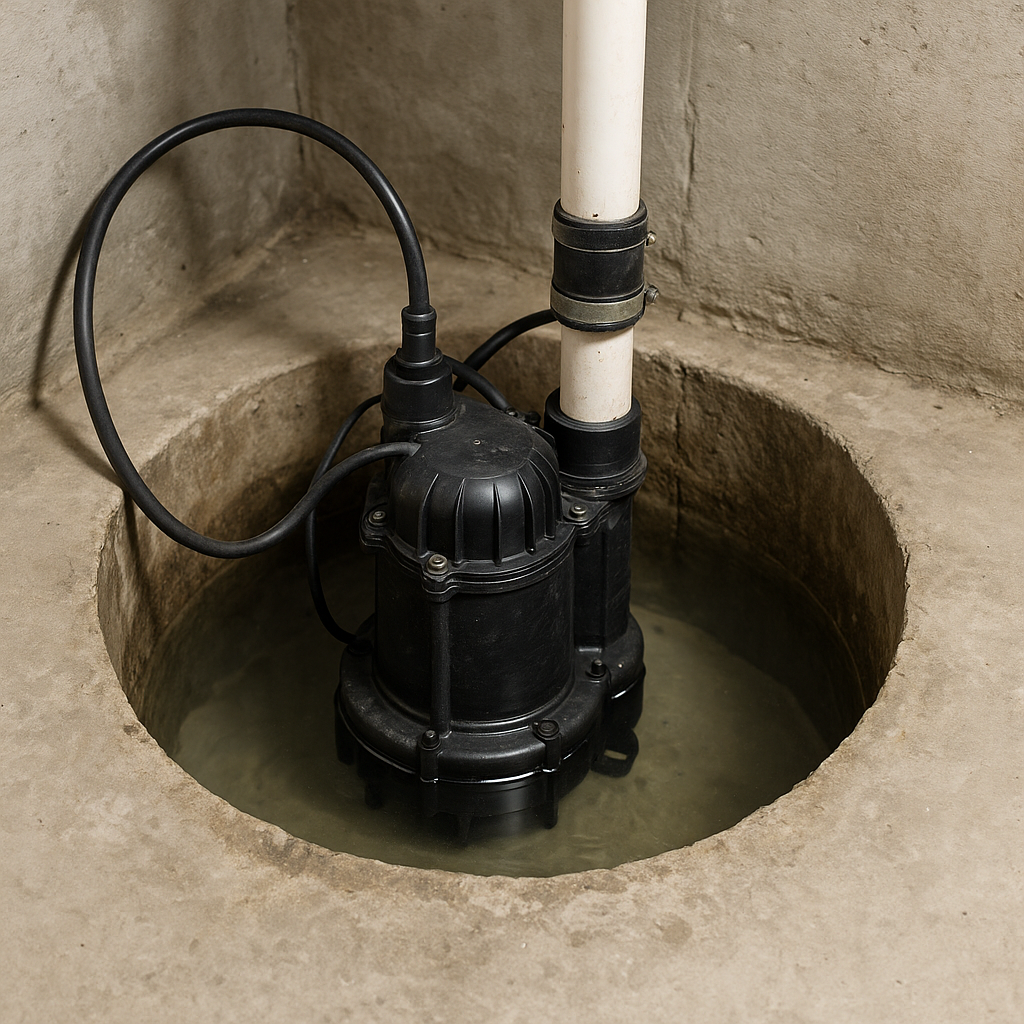
A sump pump is the quiet workhorse under a lot of basements and crawlspaces. It sits in a pit dug at the lowest point of the floor, and when groundwater rises into that pit, a float switch tells the pump to turn on and push the water out through a discharge pipe before it ever reaches your slab. Most of the time, you never think about it. It runs, it stops, the floor stays dry, and life goes on.
The problem is that a single sump pump is a single point of failure protecting one of the most expensive parts of your home. A backup sump pump exists for the day that the main pump can't do its job, and understanding when and why that happens is the whole point of this article.
Quick Answer: Most homes with a finished basement, a high water table, or a habit of losing power in storms should have a backup sump pump. The main pump runs on house electricity and one float switch, so a power outage or a mechanical failure can leave it dead exactly when water is rising. A backup takes over in those moments.
How a Sump Pump Keeps Water Out in the First Place
To understand why a backup matters, it helps to see how thin the margin is on the main unit. A standard sump system has three working parts: the pit, the pump, and the float switch. Water seeps into the pit through the soil and gravel around your foundation. As the water level rises, it lifts a float, which trips a switch, and the switch sends power to the motor. The pump moves the water up and out, the level drops, the float falls, and the motor shuts off. That cycle repeats every time groundwater collects.
Think of it like a bilge pump on a boat. As long as it keeps up with the water coming in, the hull stays dry, and you never notice it. Let it quit, or take on water faster than it can move, and the same space floods surprisingly fast. Your basement is the hull, and the sump pump is the only thing bailing.
Everything in that chain depends on two fragile things: house power reaching the motor, and every mechanical part working on cue. Remove either one, and the pit fills. That is the gap a backup is built to close.
The Two Moments a Main Pump Actually Fails
There are really two ways your protection can disappear, and a good backup has to address both.
The first is a power outage. Your main pump plugs into a household outlet, so no power means no pump. The cruel part is the timing. The same heavy storm that drives water against your foundation and raises the water table is often the one that knocks out the grid. So the pit is filling at its fastest rate exactly when the pump has no way to run. This outage-during-the-storm scenario is the single biggest reason plumbers push backups, because it is when a basement is most likely to flood and least likely to be protected.
The second is a mechanical failure of the pump itself. The motor can burn out after years of cycling. The float switch can stick, either jammed down so the pump never starts or jammed up so it runs dry and cooks itself. Debris can clog the intake or the impeller. And sometimes the pump is simply overwhelmed, working perfectly but unable to move water as fast as it is pouring in. In every one of these cases, the power is on, but the pit still fills.
A backup pump is a second, independent means of moving water that does not share the main pump's weak points. That is why it earns its place.
The Three Kinds of Backup, and What Each One Trades
Not all backups work the same way, and the differences matter when you decide what fits your home.
Battery Backup Pumps
A battery backup is a second pump wired to a charged battery rather than to your wall outlet. When the power goes out or when the main pump fails while power is still on, the battery unit takes over and keeps pumping. Because it carries its own energy source, it is the only backup type that continues operating during an outage without relying on anything outside the house. The trade is that a battery holds a finite charge, so it buys you hours, not days, and the battery itself is a part you have to maintain.
Water-Powered Backups
A water-powered backup takes a completely different approach. It has no battery at all. Instead, it runs on the pressure in your municipal water line, using that flow to create suction that pulls water out of the pit. Because it needs no electricity and no battery, it can run for as long as the water main holds pressure, which can outlast a very long outage. The catch is real, though: it consumes municipal water the entire time it runs, and it only works if your city pressure is strong and steady. Homes on a private well generally can't use one, and areas with weak pressure won't get reliable performance.
A Second AC Pump
The most limited option is simply a second electric pump on its own circuit. It can help if your first pump fails mechanically while the house still has power, since a separate circuit protects against a single tripped breaker. But it still plugs into the same grid, so it does nothing in an outage, which is the failure most likely to flood you. On its own, it is a partial answer at best.
Who Needs a Backup Sump Pump the Most
A backup is not equally urgent for every home. You should treat it as close to mandatory if you fit any of these:
- You have a finished basement- Carpet, drywall, furniture, and electronics turn a wet floor into a five-figure loss instead of a mopping job.
- You sit on a high water table- If your pit fills often, even in normal weather, your margin for a single failure is already thin.
- Your power goes out in storms- Rural and coastal lines drop regularly, and that is precisely when the pit is filling fastest.
- Your sump cycles frequently- A pump that runs constantly wears out sooner and is more likely to fail without warning.
- You simply can't absorb a flood- A stored inventory, a home office, a heating system in the basement, or an income unit downstairs all raise the cost of one bad night past what a backup would ever cost.
If none of those describe you, a backup may be optional. For most homes with a below-grade space they care about, it moves from nice-to-have to sensible insurance.
Keeping a Backup Ready for the Day It Matters
A backup only helps if it works on demand, and these systems fail quietly if ignored. Test both pumps on a schedule by pouring water into the pit until each one kicks on and pushes it out. For a battery unit, keep it charged and plan to replace it on schedule, since a battery that has lost capacity is no backup at all. Clear the pit of gravel, silt, and debris so nothing can foul either float or intake. Most systems also include an alarm that alerts you when the backup activates, which is worth wiring in, because a backup running is your first sign the main pump has already failed.
A Safety Note Worth Taking Seriously
Standing water and electricity are a dangerous pair. If your basement is already flooding and the pump is plugged into an outlet near that water, do not wade in to check it. Cut power at the breaker first if you can reach the panel safely, and keep out of standing water that may be energized. Sump and backup systems also involve discharge routing, check valves, sizing, and battery or water connections that must be properly installed to work when you need them. This is the kind of install worth handing to a licensed plumber rather than guessing at, both for safety and so the system actually performs the day the storm hits.
Frequently Asked Questions
Beyond a power outage and an outright mechanical failure, there is a third mode people forget. A stuck check valve on the discharge line lets the pumped water fall right back into the pit, so the pump cycles endlessly and never empties it. A frozen or blocked outdoor discharge line does the same thing, since the water has nowhere to go and returns to the pit. A backup covers those failures too, not just the loss of power or a burned-out motor, because it moves water through its own separate discharge path.
A battery backup is a second pump powered by a charged battery, and it typically runs for several hours up to about a day, depending on how often it has to cycle. A water-powered backup uses your municipal water pressure instead, with no battery to maintain, but it spends roughly one to two gallons of city water for every gallon it pumps out of the pit. That water use is the trade for needing no battery. It also needs strong, steady city pressure to work, which rules it out for most homes on a private well.
Yes, because age is not the failure point a backup addresses. A brand-new pump can still be knocked completely offline by a power outage, and it can be overwhelmed when water pours in faster than any single pump can move it. The backup exists for the specific failures a lone pump on house power can never cover, and those have nothing to do with how many years the main unit has on it.
It has its own float switch, set slightly higher in the pit than the main pump's float. If the main pump doesn't keep up or doesn't run at all, the water keeps rising until it reaches that higher float, which triggers the backup. That higher setting is exactly why a backup catches both problems at once: a dead main pump that never fires, and a rising level the main pump can't outpace.
Yes. The battery is usually an AGM or deep-cycle type that loses capacity over about three to five years, so plan to replace it on that schedule rather than waiting for it to fail. The key point is how you test it: load-test it under the pump's actual draw, not just a voltage check, because a tired battery can read full voltage yet still collapse the moment the pump pulls current. The pump body and its floats should be checked at the same time, so the unit runs on the day you finally need it.
Many modern units have a smart alarm that texts you or sends an app notification rather than only sounding a buzzer in an empty basement. Better ones distinguish a high-water alarm, meaning the water has risen past both floats, from a low-battery alarm, meaning the charge is dropping. That distinction tells you whether you are looking at an active flooding risk or simply a battery to swap. Either way, the alert means your main pump has already failed for that cycle and needs inspection before the next storm.
Ask about a battery or water-powered backup for your sump system — protect your basement before the next outage. AT Plumbing Services serves Scarborough, South Portland, and Portland. Call (207) 707-3170 to schedule an assessment.
