
How Long Do Cast Iron Drain Pipes Last in an Old House?
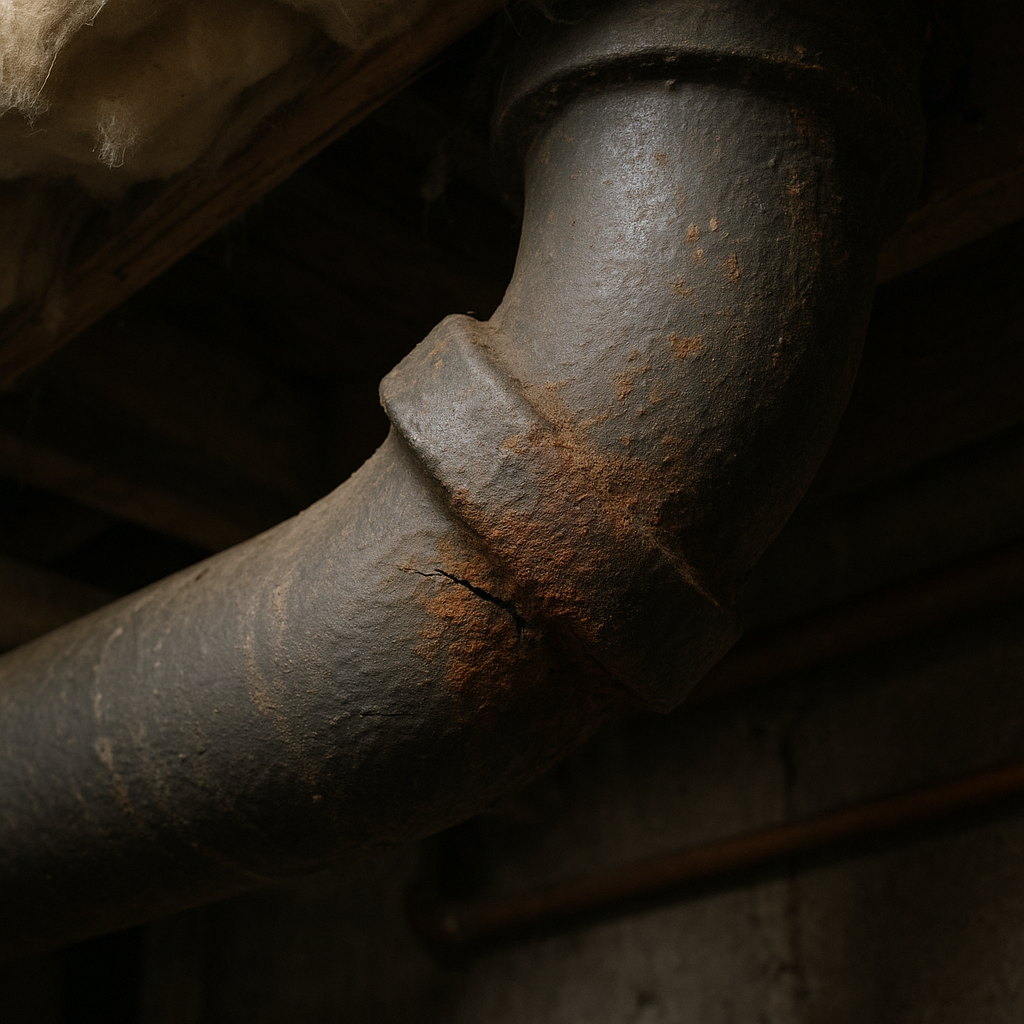
You bought an older home with good bones, and somewhere in the basement or under the floor runs the original cast iron drain system that has been carrying water away since long before you owned the place. Then the drains start gurgling, a backup happens for no clear reason, and you find yourself wondering how much life is left in pipes you cannot even see.
Cast iron was built to last, and it did its job for generations. But it does not last forever, and in an old house, it is worth knowing roughly where those pipes are on the clock and what the early warnings of failure look like.
How Long Cast Iron Actually Lasts
The common figures line up pretty well across the trade: cast iron drain and sewer pipe typically lasts somewhere between 50 and 75 years, and under good conditions can reach closer to 100. The reason the range is wide is that lifespan depends on what has been running through the pipe, how wet the surrounding soil is, and how well the system was installed and supported. Some cast iron begins to deteriorate noticeably after about 25 years, while others of the same age are still solid.
For an old house, the practical takeaway is simple. If the home still has its original cast iron and it was built more than half a century ago, those pipes are at or past the middle of their expected life, and some are near the end of it. That does not mean they will fail tomorrow, but it does mean they deserve attention rather than assumption.
Why It Fails From the Inside Out
Here is the part that surprises people: cast iron usually rots from the inside, where you cannot see it. Waste water, especially the acidic content of a drain line, slowly corrodes the interior of the pipe. Because the bottom of a horizontal drain is where water and waste sit the longest, corrosion concentrates there and eats a channel, thinning the pipe from within while the top still looks intact. Scale and rust also build up on the interior walls, narrowing the bore the way plaque narrows an artery, so the pipe carries less and clogs more easily as it ages.
Two other things speed it along. Poor support or a shifting structure can crack a pipe that corrosion has already thinned, and roots can find any crack or joint and force their way in. By the time the damage shows up as a backup, the pipe has often been deteriorating quietly for years.
| Approximate age | What to expect |
|---|---|
| Under 25 years | Generally sound; routine care |
| 25–50 years | Interior corrosion and scale begin; watch for slow drains |
| 50–75 years | At or past typical lifespan; failures become common |
| 75+ years | Living on borrowed time; plan for assessment or replacement |
The Warning Signs Worth Acting On
Old cast iron tends to announce its decline before it fails outright, if you know what to listen to and look for. Recurring or unexplained backups are the loudest signal, because a corroded, scaled, or channeled pipe clogs far more easily than a healthy one. Chronically slow drains throughout the house point to a system-wide narrowing rather than a single clog. Discolored or rusty water from the drains, a persistent sewer odor, damp spots or staining near where pipes run, and patches of unusually green lawn over a buried line all suggest a leaking or failing pipe. Any one of these on an old cast iron system is worth a professional look, ideally with a camera inspection that shows the interior condition directly.
If your home is over about 50 years old and still on original cast iron, a one-time camera inspection of the main drain is the single most useful thing you can do. It turns guesswork into a clear picture of how much channeling and scale is actually inside the pipe, so you can plan instead of react.
Why Older Housing Stock Matters
A lot of older homes were built when cast iron was the standard for drains and sewers, which means a large share of these houses are running pipe that is now well into its expected lifespan. Add in damp ground and cold winters where they occur, and the conditions are not gentle on aging iron. The freeze cycles and gradual settling that come with older foundations put steady stress on pipes that internal corrosion has already thinned and weakened from the inside. None of this means panic, but it does mean that in an older home with original drain lines, the buried cast iron is worth checking rather than trusting on faith.
Frequently Asked Questions
Not automatically. Age tells you to check, not to replace. Plenty of old cast iron is still serviceable, and the right move is an inspection to see the actual interior condition. Replace based on what the pipe looks like inside, not the number of years alone.
The clearest way is a camera inspection, in which a plumber runs a small camera down the drain to directly inspect corrosion, scale, channeling, and cracks. Combined with the outward signs, slow drains, backups, discoloration, and odor, it gives an accurate picture. Guessing from the outside is unreliable because the damage is on the inside.
Sometimes. Depending on the extent of the damage, options range from spot repairs to trenchless relining that puts a new pipe inside the old one, up to full replacement for a pipe that is too far gone. What is possible depends on how much sound material is left, which is exactly what an inspection determines.
House-wide slow drainage usually points to the main line or aging pipe rather than a single clog. In old cast iron, decades of interior scale and corrosion narrow the pipes throughout, so everything drains sluggishly. That pattern is a sign to look at the condition of the system, not just snake one fixture.
It can be a sign that the cast iron is corroding internally, shedding rust into the water. On the drain side, it points at a deteriorating pipe. It is worth investigating rather than ignoring, because internal corrosion is what eventually channels through the pipe and causes leaks or backups.
There is no exact answer without seeing it, because two pipes of the same age can be in very different shapes. At 60 years, the system is at or past its typical lifespan, so it should be inspected rather than assumed sound. The camera tells you whether you have years left or a replacement coming.
Know Where Your Pipes Are on the Clock
Cast iron earned its reputation by lasting 50 to 75 years or more, but in an old house, those years add up, and the pipe quietly corrodes from the inside long before it fails. Rather than waiting for a backup to make the decision for you, learn the actual condition through an inspection and watch for the warning signs. Knowing where your drains sit on the clock turns an eventual emergency into a repair you can plan.
If your older home still runs on original cast iron, a camera inspection tells you exactly how much life is left. AT Plumbing Services serves Scarborough, South Portland, and Portland. Call (207) 707-3170 to schedule an assessment.
