
Your Shower Valve Is Costing You More Than You Think
You step in, twist the handle, and spend the next two minutes fiddling with the temperature because the water swings between scalding and cold and never quite settles. That is not a water heater problem. That is a valve problem. Most homeowners go years assuming their shower runs that way, attributing the inconsistency to the building, the pipes, or some vague infrastructure issue they cannot control. The truth is that a poorly matched or worn-out shower valve is behind most temperature instability complaints, and it affects more than comfort. A valve that cannot properly regulate pressure and temperature keeps the water running longer, inflating your utility bill every single month.
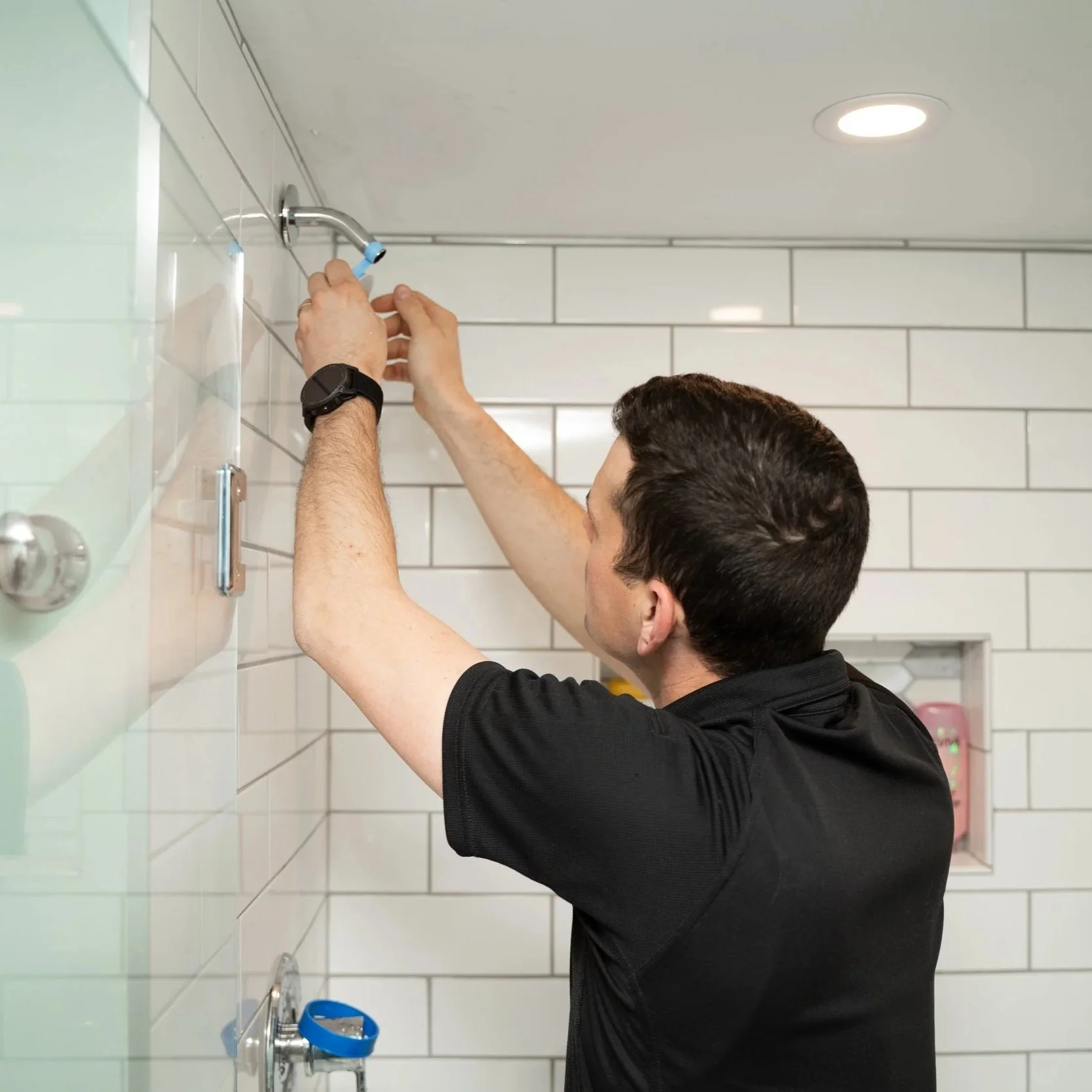
A professional plumber installs a custom shower valve, ensuring proper compatibility and pressure balance to prevent internal leaks and costly long-term wall damage.
What Is a Shower Valve and Why Does the Type Matter So Much
A shower valve controls two things: how much hot and cold water mix, and how much total water flows through. Homeowners often think of it as a simple on/off knob, but the internal mechanics are what actually determine whether your shower delivers consistent results. There are pressure-balancing valves, which keep the hot-to-cold ratio stable even when someone flushes a toilet elsewhere in the house, and there are thermostatic valves, which actually lock in a temperature and hold it regardless of pressure fluctuations. Most older homes have basic pressure-balancing units, and many of those are decades old, operating with worn cartridges and failing seals that have never been replaced.
The misunderstanding homeowners carry is that a shower valve is just a connector, a piece of plumbing hardware with no real performance role. That assumption leads people to replace a leaking valve with the cheapest available option, often a builder-grade unit from a big box store that ships with a plastic cartridge and no real mechanism for temperature memory. Within a few years, the same complaints resurface. Custom shower valve installation means selecting a valve that matches your home's water pressure range, your household's usage patterns, and the fixtures you already have or plan to install. It is not a luxury upgrade for high-end bathrooms. It is the foundation that determines whether everything downstream functions as it should.
The Hidden Damage That Keeps Building When You Ignore Valve Problems
A shower valve that leaks internally does not always announce itself with dripping water on the floor. Internal valve failure can push water into the wall cavity behind your tile, slowly saturating the drywall or cement board, so no visible sign appears for months. By the time you notice soft tile, bubbling paint near the bathroom, or a musty smell that never fully goes away, the remediation cost has grown far beyond what a valve replacement would have been. Mold behind bathroom walls is not a minor nuisance. In many cases, it means opening the wall, replacing the substructure, retiling an entire section, and still addressing whatever caused the original leak.
Homeowners who delay valve replacement after noticing problems, whether that is an unexplained spike in water bills, reduced pressure at the showerhead, or handles that feel loose and imprecise, are operating under the assumption that the issue is cosmetic. It rarely is. A valve that fails to hold pressure is doing mechanical damage to itself with every shower cycle. Sediment from supply lines accumulates inside the cartridge housing. The ceramic disc or rubber seat wears unevenly. What begins as a minor inconsistency can progress to full valve failure, and full valve failure during active use can flood a shower pan and send water under the floor. Getting a professional evaluation at the first sign of trouble is not overcautious. It is a practical decision.
What Most Homeowners Get Wrong About Valve Compatibility
Walk into any plumbing supply house, and you will find a wall of valve bodies, trim kits, cartridges, and handle escutcheons. What is not immediately obvious from that wall is that most of those components are not interchangeable. Valve bodies are brand-specific and often model-specific. A Moen cartridge will not work in a Delta valve body. A Kohler trim kit will not fit over a Price Pfister rough-in. Homeowners who attempt DIY valve work frequently discover this only after they have already purchased parts, often after already cutting into the wall. The result is a second trip to the supply house, additional time with the water shut off, and in some cases, a trim kit that technically fits but does not align properly with the finished tile opening, creating a gap that invites moisture intrusion.
The compatibility issue extends beyond brand matching. Valve bodies are designed for specific supply configurations, and the rough-in depth, the distance from the finished wall surface to the valve body, determines whether the trim kit seats correctly. If a bathroom has been retiled at any point, the added thickness of new tile can push a valve body out of the acceptable depth range, requiring either a valve extension or a full rough-in replacement. Custom shower valve installation accounts for all of this before a single tool is picked up. Measurements, pressure ratings, intended fixture pairing, and rough-in depth are all evaluated during the selection process. That is what separates a valve that works correctly from one that merely passes water.
Seasonal and Age Factors That Accelerate Valve Wear
In regions with significant temperature swings, the components inside a shower valve undergo repeated thermal expansion and contraction. Over the years, this degrades rubber components faster than a moderate climate would. Cartridge seals, O-rings, and seat washers all have service lives that are shortened by temperature stress, water quality, and frequency of use. Homes on well water with higher mineral content experience accelerated buildup inside valve bodies, which can cause handles to stiffen and cartridges to seize. A valve installed fifteen or twenty years ago may already have exceeded its design service life, even if it has not yet shown a visible failure.
Water pressure also plays a role. Homes with supply pressure above 80 PSI are running valves and cartridges harder than intended, and that stress is cumulative. If your home does not have a pressure-reducing valve on the main supply line, every fixture in the house is operating under excess stress. Custom valve installation that accounts for supply pressure, including recommending a PRV if needed, protects the entire shower system from premature wear. The goal is not just to fix the current complaint. It is to install a valve that performs well for the next twenty years.
