
Your Dripping Faucet Is Running Up Your Water Bill Daily
The drip from the kitchen faucet has been there so long that you have stopped hearing it, but the water meter has not stopped counting it. A faucet that drips once per second wastes more than 3,000 gallons of water per year, and most dripping faucets are not dripping once per second by the time they have been ignored for a few months. They are dripping faster because the internal components that produced the first slow drip have been wearing further with every cycle of water pressure pushing through an incomplete seal. Faucet repair falls into that category of home maintenance that feels trivial until you calculate the cumulative cost of doing nothing, and by the time most homeowners act on a dripping faucet, the repair has moved from a cartridge swap to something more involved.
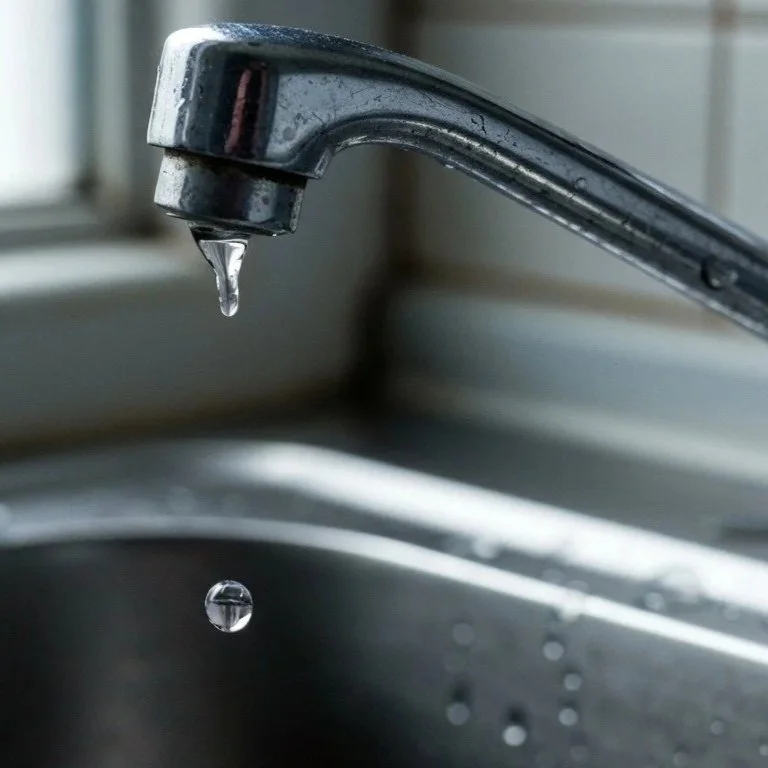
A constantly dripping faucet wastes thousands of gallons annually, and unresolved cartridge, washer, or valve seat wear can increase water bills while causing larger plumbing repair issues over time.
What Is Actually Causing Your Faucet to Drip
A dripping faucet is not a single problem with a single solution. The internal cause of the drip depends on the faucet type, the specific component that has worn or failed, and the water conditions the faucet has been operating in. Ball faucets, which feature a single lever that rotates over a dome-shaped cap, use a rotating ball with ports that align to control flow and temperature. They use springs, seats, and O-rings that wear over time and allow water to leak past the ball when the faucet is closed. Cartridge faucets use a sliding or rotating cartridge that controls both volume and temperature in a single-handle design, and the cartridge itself is the component that wears and allows water to pass when it should be blocking.
Ceramic disc faucets use a cylinder containing two ceramic discs that rotate against each other to control flow. They are among the most durable faucet types because ceramic is harder and more wear-resistant than rubber components, but even ceramic discs can develop mineral deposits on their mating surfaces over time that prevent complete closure. Compression faucets, which are the classic two-handle style where each handle compresses a rubber washer against a seat, are the faucet type most likely to be found in homes built before 1990, and their rubber washers wear on a predictable schedule that requires straightforward but recurring repairs. Understanding which type of faucet is dripping determines which components need attention, which is why the diagnostic step matters as much as the repair itself.
The Diagnosis Mistake That Leads to a Repair That Does Not Work
The most common reason a faucet repair fails is that the wrong component was replaced. A homeowner who buys a replacement cartridge for a dripping single-handle faucet and installs it correctly may find that the faucet still drips because the cause was not the cartridge but a worn O-ring on the cartridge housing, or a damaged seat that the new cartridge cannot seal against. A two-handle faucet where only the hot side drips, repaired by replacing only the hot-side washer, may continue to show signs of failure if the seat the washer presses against is pitted or corroded, because no washer, new or old, can form a complete seal against a damaged seat.
Professional faucet repair begins with identifying the specific failure mode rather than assuming the most obvious component is the cause. For a ball faucet that drips at the spout, the seats and springs are the first inspection point, but the ball itself may be scored, and replacing only the seats while leaving a scored ball means the repair will fail again as the new seats wear against the damaged ball surface faster than they would against an undamaged one. For a ceramic disc faucet with incomplete closure, the discs may need to be cleaned of mineral deposits rather than replaced, or may need replacement if the deposits have etched the disc surface beyond cleaning. Getting to the correct diagnosis before purchasing or installing parts is what separates a repair that lasts from one that requires a second visit.
Handle Drips Versus Spout Drips: They Are Not the Same Problem
A faucet that drips from the spout when the handle is off, and a faucet that leaks from around the handle or at the base of the spout are two different failure modes with different causes and different repairs. Spout drips, water coming from the end of the faucet after the handle is closed, indicate that the flow control component, the cartridge, ball, disc, or washer, is not sealing the waterway completely. Handle leaks, water appearing around the base of the handle or around the escutcheon plate, indicate that the O-rings or packing around the valve stem are failing and allowing water to escape around the stem rather than through the waterway.
Base leaks on a two-handle kitchen faucet, water appearing around the base where the faucet body meets the sink deck, typically indicate that the O-rings on the faucet body are failing or that a connection between the faucet and the supply lines below the deck is seeping. In each case, the visible location of the leak points to a specific internal component, and replacing the correct component for the type of leak produces a lasting repair. Replacing the wrong component results in a faucet that may appear repaired for a few days before the same leak, or a related one, reappears at the same or an adjacent location.
When the Seat Is the Problem Nobody Addressed
In compression faucets and some cartridge faucet types, the valve seat is the metal surface against which the rubber washer or cartridge seals when the faucet is closed. Valve seats wear over time, and in homes with hard water, mineral deposits accumulate on the seat surface and create an irregular contact area that no new washer can seal against completely. A faucet that has had its washer replaced multiple times without lasting improvement almost certainly has a damaged or mineral-coated seat as the underlying cause.
A seat wrench can remove a replaceable seat for replacement with a new one, or a seat dressing tool can resurface a seat that has minor pitting or deposits without removing it. These are tools and techniques that most homeowners do not own, and many do not know exist, which is one of the reasons that DIY compression faucet repair often produces a temporary fix rather than a lasting one. At A.T Plumbing Services, a faucet repair call on a two-handle compression faucet includes seat inspection as a standard step, because addressing only the washer without the seat is the repair pattern that generates repeat calls for the same faucet.
Faucet Age and the Point Where Repair Stops Making Sense
Faucet repair is the right choice when the faucet body is in good condition, OEM replacement parts are available for the specific faucet model, and the repair cost represents clear value relative to replacement. All three of those conditions have a timeline. Faucet bodies in homes with aggressive water chemistry develop internal corrosion, limiting how long the repair can last. Discontinued faucet models lose OEM parts availability, and universal replacement parts that approximate the original specification perform less reliably over time. And as faucets age, the likelihood that multiple components need attention simultaneously increases, pushing repair costs closer to replacement costs.
A faucet that is more than fifteen years old, that has required multiple repairs without lasting improvement, or whose brand has been discontinued without available OEM replacement parts, is generally a better replacement candidate than continued repair investment. A plumber can assess the specific faucet, its age, its condition, and the current parts availability, and give an honest recommendation on whether repair or replacement is the more economical choice over a two to three-year horizon. That recommendation should be based on the actual faucet in question, not on a general preference for one approach over the other.
