
Maine Drain Leaks Hide Longer in Older Homes Than You'd Expect
The smell has been there since late winter, faint enough that you convinced yourself it was something seasonal, something that would clear up when the house aired out in spring. It did not clear up. It got slightly worse, and now there is a spot on the bathroom floor near the base of the tub that gives just slightly when you step on it. That soft spot is subfloor damage from a drain leak that has been running long enough to saturate the wood around the drain connection, and the smell is the combination of that moisture and the sewer gas that has been finding its way through a compromised seal. In Maine, drain leaks in older homes have a particular tendency to go undetected for extended periods because the housing stock, the pipe materials, and the seasonal conditions all conspire to keep the symptom below the threshold of obvious.
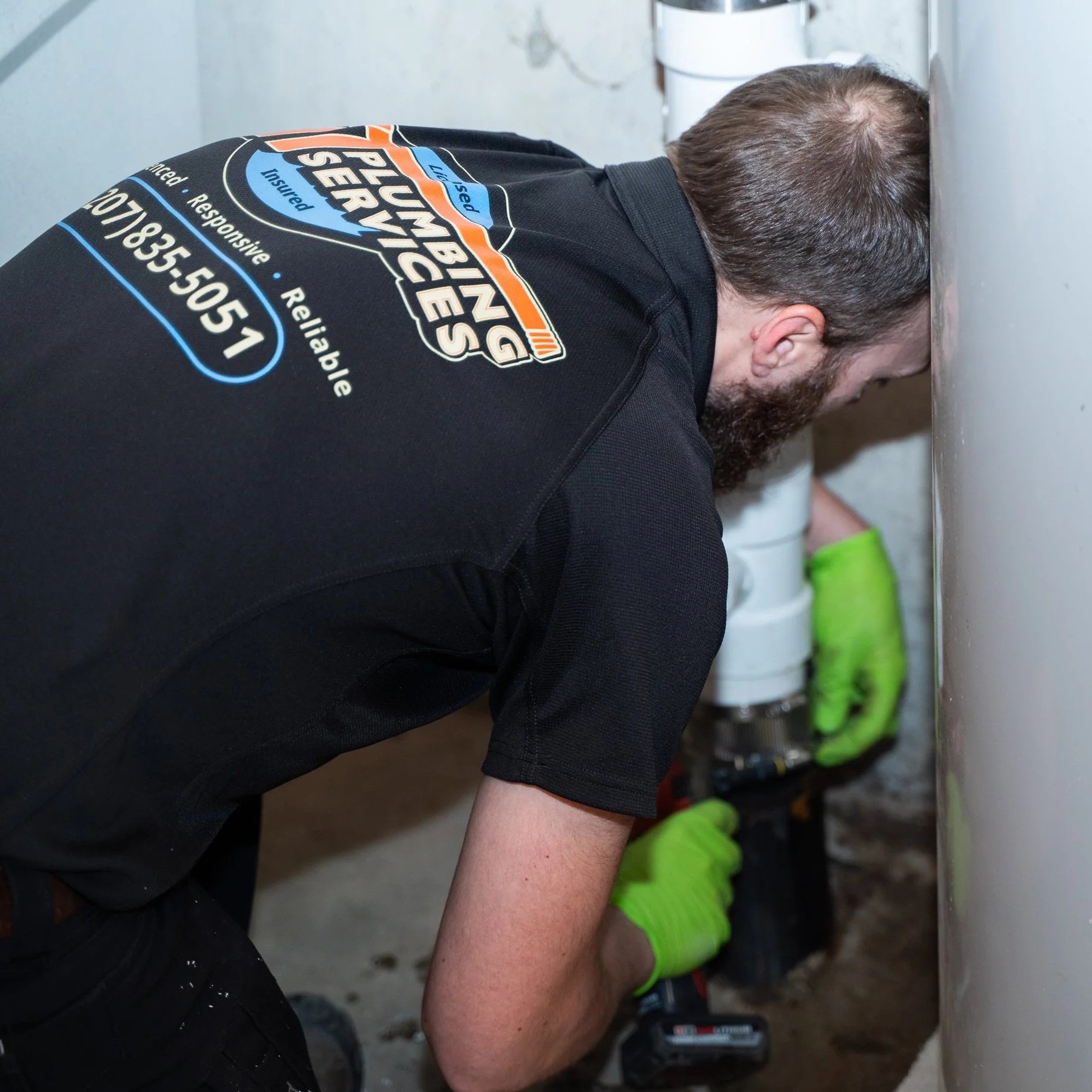
An AT Plumbing Services technician repairs PVC drain pipe connections in a Maine home basement, preventing slow leaks and costly structural water damage.
What Maine's Older Drain Systems Are Actually Made Of
A meaningful portion of Maine's residential housing was built when cast iron was the standard material for drain, waste, and vent systems. Homes throughout communities from Lewiston and Auburn to the greater Bangor, ME, region and the coastal communities of the Midcoast area contain cast iron drain systems that have been in continuous service for fifty or more years. Cast iron is genuinely durable under good conditions, but its failure mode, internal corrosion that progresses gradually over decades, makes it a drain material that requires periodic assessment rather than indefinite assumption of continued service.
The joints in older Maine cast iron drain systems were sealed with lead and oakum, a fibrous packing material that is compressed into the joint hub and then sealed with molten lead poured over it. Over fifty years of service, the lead and oakum packing dries, shrinks, and loses its sealing ability. The joints do not fail catastrophically. They develop slow seeps that are often too minor to produce visible water at the joint but enough to introduce moisture into the surrounding space over time. In a Maine home where the bathroom is above a finished basement ceiling, a weeping cast iron hub joint in the drain system above that ceiling can create moisture conditions in the ceiling cavity that appear as a water stain months after the leak began. By the time the stain is visible, the wood framing that the drain pipe rests on may already have significant moisture damage.
Cold Season Hiding: Why Maine Drain Leaks Escape Notice Longer
Maine's long heating season creates household conditions that make drain leak symptoms harder to detect than they would be in a warmer climate. Interior humidity levels in Maine homes during winter are typically actively managed through heating systems that dry the air, so a slow moisture introduction from a drain leak may be absorbed into the dry winter air rather than accumulating visibly. A small drain leak in a wall cavity that would produce visible condensation on the wall surface in a humid summer climate may remain undetected in a dry Maine winter because the surrounding air absorbs the moisture before it can accumulate.
The inverse occurs in spring and early summer, when Maine homes transition from dry winter air to higher humidity, and moisture absorbed by framing and insulation during the winter begins to re-release. Homeowners who notice mold odors or soft flooring in the spring often assume the problem started recently with the seasonal change in humidity. In many cases, the drain leak that produced the moisture has been running since fall or earlier, and the spring odor is simply the point at which the accumulated moisture in the structure finally reaches a visible or olfactory threshold. By that point, the repair scope is typically larger than it would have been if the leak had been caught in November.
Cast Iron Versus PVC: The Two Drain Systems Maine Homes Have
Maine homes that have had plumbing work done since the 1980s often have a combination of original cast iron drain pipes and newer PVC sections that were installed as part of a bathroom addition, kitchen remodel, or targeted repair. This mixed-material drain system is common and functional, but the transition points between cast iron and PVC can create potential leak points, depending on the connection method used. Fernco couplings and similar flexible rubber connectors are the standard method for joining PVC to cast iron in repair and remodel contexts, and they are reliable when installed correctly and secured with properly tightened band clamps.
A Fernco coupling that has been in service for fifteen years in a Maine home, particularly one that has experienced significant thermal cycling between cold winters and warm summers, may have degraded enough at the rubber-to-pipe interface to begin weeping. The outside of the coupling may look intact, while the interior seal has loosened enough to allow a slow leak. In Maine, homes with previous plumbing repairs or remodels that created cast iron to PVC transitions are the first places a drain leak diagnostic should examine when moisture symptoms are present in the area around the drain system.
What Drain Leak Repair Looks Like in Maine's Finished Spaces
Drain leak repair in a Maine home where the drain system runs through finished walls and ceiling spaces requires a sequenced approach that minimizes disruption to finish surfaces while still providing adequate access to identify and address the full extent of the problem. The tendency to open the smallest possible access and hope the leak is at the first visible connection point is understandable from a cost and disruption standpoint, but it frequently results in a repair that addresses the nearest symptom without confirming whether additional sections of the same aging drain system are at the same point of failure.
At AT Plumbing Services, drain leak repair in older Maine homes begins with a camera inspection of the affected drain line, wherever the pipe diameter allows, because the camera shows conditions throughout the line rather than just at the single access point. That inspection often reveals that the joint that leaked and caused the visible symptom is one of several joints in a similar condition, and that addressing the full section during the current access is more economical than closing the wall, discovering the next failure in six months, and opening it again. That approach, assess the full line first and repair comprehensively, is what separates a drain repair that holds for the next twenty years from one that requires a callback.
Slab and Below-Grade Drain Leaks in Maine's Seasonal Homes
Maine has a significant population of seasonal properties, camps, cottages, and second homes that are closed for the winter and reopened in spring. Below-grade drain systems in these properties are subject to freeze-thaw stress that drain systems in continuously heated homes are not. A drain pipe under a concrete slab or in a crawl space that freezes during a winter when the property is unoccupied and without heat can develop cracking at joints or at sections that were already showing internal corrosion. The freeze may not produce a catastrophic failure. It may produce a crack or joint separation small enough that the first few uses in spring appear normal, and the leak only becomes apparent after weeks of use when the accumulated moisture from repeated small releases finally produces a surface symptom.
Property owners reopening a Maine seasonal home after a winter closure should include a drain system check in the spring startup process, particularly for properties in areas where temperatures drop below zero and where the property was without heat for extended periods. Running water through all drains and observing the accessible sections of the drain pipe in the basement or crawl space for seepage is a basic diagnostic that can identify developing problems before they become established damage. A plumber performing a seasonal property startup can include a drain system pressure or camera check as part of the service, which is a modest addition that provides meaningful protection against discovering a drain problem after a summer of use has allowed it to progress.
