
What a Bathroom Remodel Plumbing Quote Should Include
Two quotes for the same bathroom remodel land in your inbox, and one is noticeably lighter than the other. The cheaper one feels like the obvious pick, until you read both closely and realize the leaner quote barely says what the plumber is actually doing. That gap is where remodels go sideways. The wall comes down, the crew finds something, and suddenly there's a change order for work you assumed was included all along.
A good plumbing quote is really a scope of work in disguise. It tells you what's being done, in what order, and where the line is between a fixed price and a fair-warning unknown. The more specific it is, the fewer surprises wait behind the old tile.
Rough-In and Finish: a Quote Should Name Both Phases
Plumbing for a remodeled bathroom is done in two distinct passes, and a complete quote covers both.
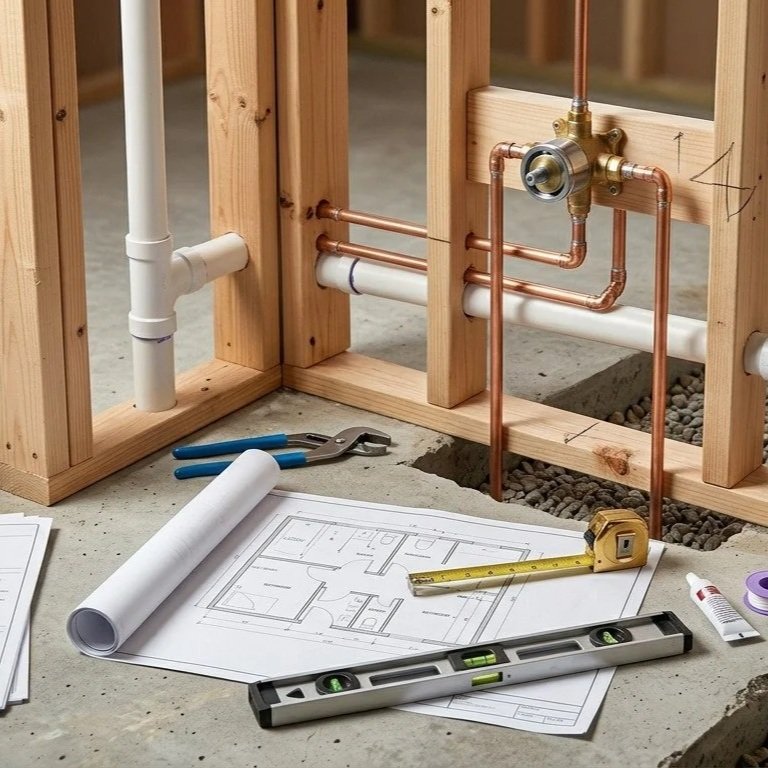
The rough-in is everything that happens while the walls and floor are open: the supply lines, drains, vents, and valves that get set in place before anything closes up. This is the structural plumbing, the part nobody sees once the tile is on. If a fixture is moving (the toilet shifting a foot, the vanity going to a different wall, a tub becoming a shower), the rough-in is where that relocation actually happens, and it's the most labor-heavy phase.
The finish, sometimes called the trim-out, comes after the walls are closed and the tile is set. This is mounting and connecting the visible fixtures: setting the toilet, hanging the faucet and drain on the vanity, installing the showerhead and handle, and hooking up the supply stops. A quote that lumps everything into one vague "plumbing" line gives you no way to tell whether the plumber has accounted for both passes, or whether you'll hear about the trim-out as an add-on later.
The GC Coordination That Quietly Decides Your Timeline
Most bathroom remodels run as a relay between trades. Demo crew, plumber, electrician, tile setter, and the general contractor, handing off in sequence. The plumber comes twice: once for rough-in before the walls close, once for trim-out after the tile. If those visits aren't coordinated with the GC's schedule, the whole job stalls: the tile can't go up until the rough-in passes, and the fixtures can't be set until the tile's done.
A quote worth trusting reflects that it was written by someone who's thought about where they fit in the schedule, not just what parts they're installing. In an older home especially, the plumber needs to be in sync with whoever's running the job because discoveries behind the wall affect everyone downstream. When the rough-in reveals corroded supply lines or a drain that needs rerouting, that's a scheduling conversation, not just a plumbing one.
What a Complete Quote Should Spell Out
Here's the scope of a thorough bathroom remodel plumbing quote covers. You don't need every line on every job, but you should be able to see where each one stands: included, excluded, or flagged as an unknown until demo.
| Scope item | What it should cover |
|---|---|
| Demo and disconnect | Capping and removing existing fixtures and supply/drain connections safely |
| Fixture relocation | Moving any drain, vent, or supply line if the layout changes, named fixture by fixture |
| Supply rough-in | New hot and cold lines run to each fixture, sized for the flow |
| Drain and vent rough-in | New drains pitched correctly and vents tied in so traps don't siphon |
| Valves | Shower/tub mixing valve and any shut-offs, specified by type |
| Fixtures supplied vs. by the owner | Clearly stating which fixtures the plumber provides and which you buy |
| Trim-out / finish | Setting and connecting all visible fixtures after tile |
| Testing and inspection | Pressure-testing the rough-in and coordinating any required inspection |
| Old-pipe contingency | How corroded galvanized, cracked cast iron, or other surprises are handled |
The last line is the one that separates a quote you can trust from one that bites later. In an older home, opening the walls can reveal supply lines corroded down to a trickle, a drain pipe that's scaled or cracked, or framing soft with old rot. A plumber worth hiring names this risk up front, usually as an allowance or an hourly rate for found conditions, instead of pretending an old house will behave like new construction and surprising you with a change order once the demo dust settles.
Reading Between the Lines of a Cheap Quote
Picture a quote as a moving estimate made over the phone versus one made after the mover walks through your house. The phone estimate is always lower and always wrong, because it assumes the easy version of everything. A bathroom quote works the same way. The low number often skipped the relocation, assumed your old pipes are fine, or quietly left the trim-out for "later."
So when you compare quotes, you're really comparing scopes. Does each one name the fixtures being moved? Does it say who supplies the fixtures? Does it mention the rough-in and the finish as separate work? Does it say anything about what happens if the walls hide a problem? A quote that answers those questions might cost more on paper and less in the end, because it priced the actual job instead of the hopeful version of it.
Before you compare bathroom remodel quotes on price, line them up on scope. If one names fixture relocation, rough-in, and trim-out, and how surprises behind the wall are handled, and the other just says "plumbing," they aren't quoting the same job, and the gap will show up as change orders.
Frequently Asked Questions
Almost always because it covers less. The cheaper quote may have skipped fixture relocation, assumed your existing pipes are fine, or left the trim-out as a separate charge. It might also leave no room for what demo uncovers in an older home. When you read both as scopes of work rather than just prices, the gap usually explains itself.
Rough-in is all the plumbing done while the walls and floor are open: running supply lines, drains, and vents, and setting the valves in place before anything is closed up. It's the hidden, structural half of the job and the most labor-heavy. The visible fixtures get connected later, in the finish phase. A quote should treat those as two separate stages.
Either can work, but the quote should say which. If the plumber supplies them, that cost is built in, and they're responsible for the parts. If you supply them, you control the selection, but you're on the hook to ensure they arrive on time and are complete. The trouble starts when the quote is silent on it, and each side assumes the other is handling it.
In an older home, the common ones are corroded galvanized supply lines that have narrowed to a trickle, cast-iron drain pipe that's scaled or cracked at the joints, and framing softened by a slow leak nobody knew about. None are rare, and all are easier to address with the wall already open. That's why a good quote flags the conditions as found, rather than pretending they won't happen.
The plumber typically comes twice: once for rough-in before the walls and tile close up, and once for trim-out after the tile is set. Those visits have to line up with the general contractor's schedule, because tile can't go on until the rough-in is done and inspected, and fixtures can't be set until the tile's finished. Good coordination here is what keeps a remodel from stalling between trades.
Often, yes, especially when fixtures are relocated, or new lines are run, rather than a like-for-like swap. The rough-in usually gets inspected before the walls close, which is exactly why the timing matters. A plumber who handles remodels routinely will tell you what's required and build the inspection into the schedule rather than leaving you to sort it out.
Buy the Scope, Not the Number
A bathroom remodel quote isn't really a price; it's a description of the work, and the price is just the last line. The ones worth trusting name both the rough-in and the finish, spell out which fixtures move, say who supplies what, and tell you honestly how an old house's surprises will be handled. Compare on that level, and the right choice usually gets clear, even when it isn't the cheapest sheet of paper in the pile.
Getting bids on a bathroom remodel and not sure what's really covered — Get a plumbing quote that spells out the rough-in, the finish, and how old-home surprises are handled. AT Plumbing Services serves Scarborough, South Portland, Portland, and the surrounding areas. Call (207) 707-3170.
