
What Is a House Trap — and Why It Keeps Clogging Your Main Drain
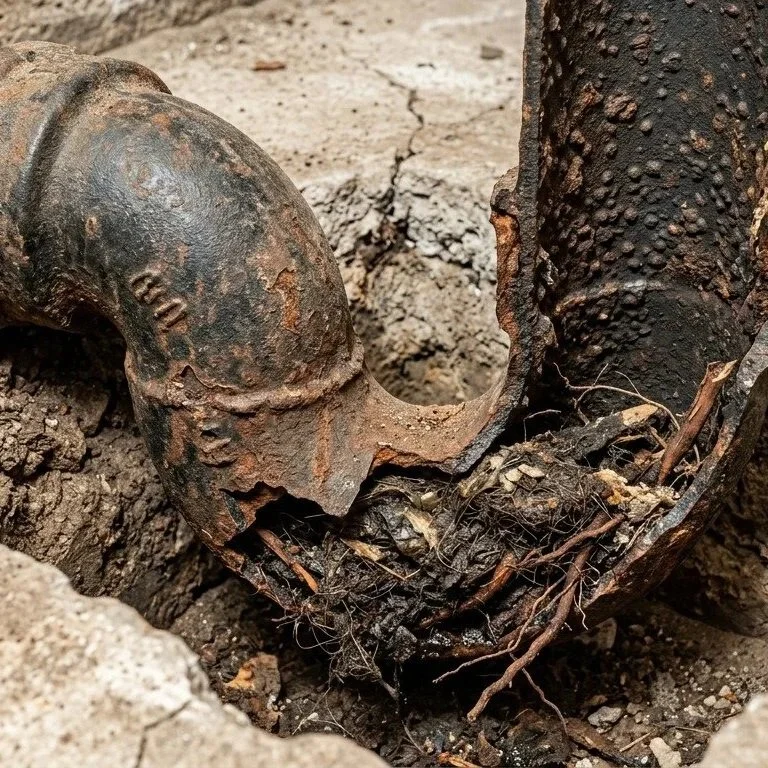
The drain in the basement floor burps up gray water again. You snaked it last spring, paid a guy to jet it the spring before, and here you are with a shop vac and a bad feeling. The water clears for a few months, then the same thing happens at the same spot. If your home went up before the 1960s, there's a good chance the repeat offender is a fitting most people have never heard of: the house trap.
It sits buried where the home's main drain leaves the building, usually under the basement floor near the front wall. And once you understand what it is, the on-again, off-again clogs stop being a mystery.
The U-Shaped Fitting Hiding Under Your Floor
A house trap is a U-shaped section of pipe, almost always cast iron, installed on the main drain line right before it heads out to the sewer or septic tank. Picture the curved trap under your kitchen sink, then scale it up to four inches across and bury it in the floor slab. Same shape, same idea, just sized for the whole house.
Builders put them in for a reason that made sense at the time. The dip in the U holds a plug of standing water, and that water was meant to block sewer gas from creeping back up the line and into the home. Most also came with one or two cleanout caps poking up through the floor so a plumber could get a rod in there.
Here's the catch. Modern plumbing already blocks sewer gas a different way: every fixture has its own trap, and the vent stack on your roof balances the pressure so those traps hold their water. The house trap became a backup that nobody needs. Worse, that buried U turned into the one spot on your whole drain system almost guaranteed to clog.
Why That U Catches Everything
A straight drain pipe lets waste slide through on a downhill grade. A trap forces the flow to dive down, swing through a tight 180-degree bend, and climb back up. Every direction change slows the water and gives solids a place to settle. Grease cools and sticks to the bottom of the bend. Hair, grit, and paper catch on the rough interior. Over the years the channel narrows until a single bad day (a big laundry load, a holiday dinner's worth of dishes) tips it into a full backup.
Old cast iron makes it worse. The inside of a cast-iron pipe doesn't stay smooth. It corrodes into a rough, scaly surface, and in spots it scales up into hard ridges called tuberculation that grab debris like a cheese grater. Tree roots find the picture even more inviting. They sense moisture at the buried joints, work a hair-thin tendril through a crack, and fan out into a root mass right inside the trap. Now you've got a tight bend, a rough wall, and a net of roots all in the same eight inches of pipe.
This is also why snaking only buys you a season. A cable punches a hole through the blockage and the drain runs again, but it leaves the bend, the scale, and the root entry points exactly as they were. The clog rebuilds on the same scaffolding. You're not fixing the problem; you're resetting the clock.
| What you're seeing | What's likely happening at the trap | What actually solves it |
|---|---|---|
| Main drain backs up every several months | Solids settling in the U-bend, then bridging | Remove the trap, replace the section with straight pipe |
| Backup right after laundry or a big dish load | Narrowed channel can't handle peak flow | Clear and re-pipe, not just snake |
| Snaking works but the clog returns | Cable opens a hole; bend and scale remain | Replace the corroded trap section |
| Recurring clog plus a faint sewer smell | Cracked trap or a dried-out, broken seal | Inspect with a camera, then remove and re-pipe |
| Roots in the clearing cable | Roots entered through cracks at the buried bend | Cut out the rooted trap, seal the new joint |
Why Plumbers Snake It Instead of Fixing It
Plenty of homeowners have had three or four companies out for the same drain and never once heard the words "house trap." There's a reason. Pulling out a house trap is real work. It usually means breaking up a patch of basement floor, cutting out a rusted four-inch cast-iron fitting that's been fused in place for decades, splicing in new straight pipe with proper fittings, and patching the slab back. It's dusty, it's heavy, and it takes a plumber who's comfortable working on old cast iron under concrete.
So a lot of shops do the easy thing. They snake it, collect the fee, and you call again in six months. The repeat visit is the business model, whether they'd put it that way or not. The fix that actually ends the cycle (removing the trap and running a clean, straight line out to the sewer) is exactly the kind of below-grade old-house work many companies would rather refer out than tackle.
When Removing the Trap Is the Right Call
Not every house trap has to go. If yours has never given you trouble and a camera shows it clean and intact, leaving it alone is reasonable. The case for removal gets strong when the trap is the proven choke point: when you've got a history of clogs at that location, when the cast iron is visibly corroded or cracked, or when roots keep showing up on the cable.
The work starts with eyes on the problem. A camera run down the cleanout shows the condition of the trap and what's downstream, so the line gets opened only where it needs to be. From there the rusted U comes out, straight pipe and a proper cleanout go in, and the floor gets patched. Done right, the chronic main-drain clog that's haunted the house for years simply ends. No more spring ritual with the shop vac.
If your main drain has backed up more than once in two years and the house predates 1960, ask specifically whether you have a house trap before you pay for another snaking. One camera run answers it, and it can save you years of repeat clearing fees.
Frequently Asked Questions
If your home was built before roughly 1960, the odds are decent. Look on the basement floor near the front wall (where the main drain heads out toward the street) for one or two round cast-iron cleanout caps sitting close together, sometimes called a "double cleanout." That paired-cap arrangement usually sits right on top of the U. The only way to confirm what shape it's in is a camera run down the cleanout.
You can snake it, and it'll clear the immediate backup. The problem is that snaking doesn't change the conditions causing the clog. The tight bend, the corroded interior, and any root entry points are all still there. So the clog rebuilds and you're back where you started in a matter of months. For an occasional one-off, snaking is fine. For a clog that keeps returning to the same spot, it's a patch, not a repair.
No, as long as the rest of your plumbing is intact. The traps under your sinks, tub, and toilet (plus the vent stack running up through your roof) already block sewer gas the way modern plumbing is designed to. The house trap is redundant. Removing it and replacing it with straight pipe doesn't open a path for gas, because the individual fixture traps are still doing that job.
Removing a house trap means breaking concrete, cutting out fused cast iron, and re-piping below grade: slower, heavier work than running a cable down the line. Some companies stick to snaking because it's quick and the clog comes back as repeat business. It often takes a plumber who's comfortable with old-home cast iron to look past the snake and name the real cause.
Usually, yes, at least a small section. The trap sits in or just under the slab, so reaching it means opening the concrete directly above it. A good crew keeps the opening as small as the job allows, replaces the trap with straight pipe and a proper cleanout, then patches the slab back. It's a contained dig, not a whole-floor tear-out.
It can. Bellied pipe, a break farther down the line, or roots in the sewer lateral can all mimic a trap clog. That's why the job should start with a camera, not a guess. The scope shows whether the trap is the choke point or whether the trouble is downstream, so you only open the floor if that's actually where the problem lives.
The End of the Spring Ritual
A house trap made sense in 1940 and makes none today. It's a buried U-bend that does a job your fixture traps and vent stack already handle, and in exchange it hands you the one spot on your drain system most likely to clog, year after year. If you've been snaking the same main drain on repeat, the fix isn't a better snake; it's getting the camera in there, confirming the trap is the culprit, and taking it out for good.
Stuck with a main drain that clogs every few months? — Get a camera inspection that pinpoints the house trap and a plan to remove it for good. AT Plumbing Services serves Scarborough, South Portland, Portland, and surrounding areas. Call (207) 707-3170.
