
4 Reasons a Laundry Drain Overflows When It Empties
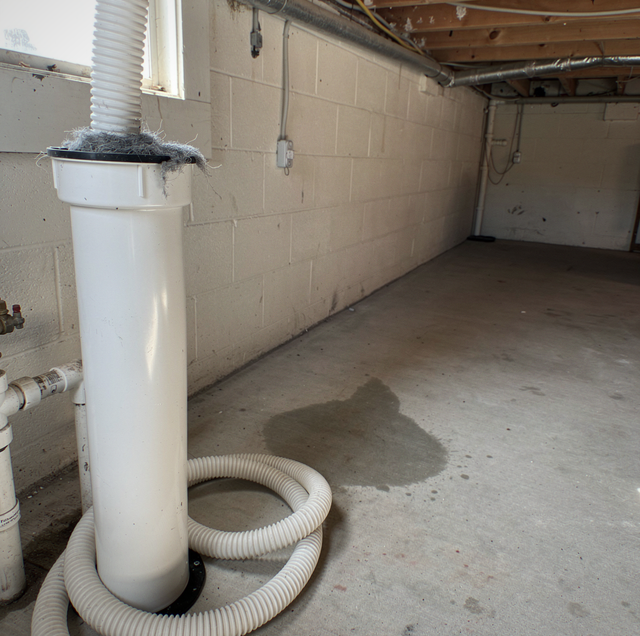
Your washer does not drain like your sink. A pump inside it forces several gallons out through your hose in under a minute, and that surge must leave through whatever pipe is waiting on the other end. Most of the time your standpipe or laundry sink drain swallows the rush without complaint. When it cannot keep pace, the water you just spun out has nowhere left to go but back up and over.
Whether your overflow shows up early in a cycle or only at the final spin, the cause lies in one of a few places between your washer and the drain that carries your water away. What follows walks through each one in the order you'd find it, so you know which is yours.
Why the Drain Has to Absorb a Sudden Surge
A washing machine's drain cycle is not a slow release. A pump pushes water out through the hose in one fast burst rather than the steady trickle a sink lets out. Whatever pipe receives that hose must swallow the whole surge inside a minute or two, several times in one wash. For a fixture built to handle a trickle, that burst is a real stress test, one repeated every time the machine runs a full load.
That framing matters to you because almost every overflow traces back to the same imbalance: the pump asks for more capacity than the drain path can supply at that instant. The rest of this looks at the four places that imbalance shows up, what the symptom table shows about which one is yours, and what a correctly sized setup looks like once you have it fixed.
The Standpipe's Height and Diameter Do Real Work
How tall a standpipe stands changes how well it drains, not just whether it does. Height and flow work against each other: for every added foot the discharge point sits above the floor, the pump's output drops by roughly a gallon a minute. A drain hose climbs no more than eight feet, and manufacturers set a floor well below that. One maker calls for a minimum of thirty-nine inches. Another puts a front-loading model's minimum at twenty-four inches, a top-loading model's at thirty.
The Uniform Plumbing Code draws its own bracket independent of any one brand, and it runs narrower than either manufacturer's ceiling: that code puts a clothes washer standpipe receptor at no less than eighteen inches and no more than thirty inches above its own trap, with a minimum inside drain pipe diameter of two inches. Undersize that pipe, or crowd it below eighteen inches, and you have built a bottleneck the pump does not know exists; it keeps right on pushing at a manufacturer-rated fifteen gallons a minute for a top-load model, ten for a front loader, and the standpipe cannot swallow the burst fast enough, especially once lint has narrowed it further. Water backs up inside the pipe, has nowhere to spread, and comes out the only opening left, the top of the standpipe itself, onto your floor.
Not every source agrees on the floor. GE's manual allows a diameter as small as an inch and a half, under the two-inch figure used elsewhere, so a pipe meeting one standard can fall short of another. When the two disagree, the larger diameter and taller minimum are the safer numbers.
Why the Drain Hose Should Never Seal Into the Pipe
The hose from your washer is not supposed to fit the standpipe the way a supply line fits a valve. It sits loosely in the opening, leaving room for air, so the pipe remains open to the atmosphere while water flows through it. Guides cap how far the hose end goes into the pipe: about five inches for a top-load washer, seven for a front-loader, never enough to touch the bottom. A hose kinked behind the machine blocks that same passage for a different reason, pinching the flow shut before the surge ever reaches the standpipe.
Check the drain hose by hand first. If it sits loose in the standpipe with visible daylight around it, the air gap is fine, and the cause sits elsewhere.
Seal that connection, and you remove the air the drain needs to breathe. A tight fit can siphon water from the tub. An open standpipe overflows where you can mop it up; a sealed one has nowhere to go until it leaks.
A Restriction Between the Trap and the Main Line
Every wash cycle sends a little lint and detergent film down the pipe, and neither fully rinses away. Over months, that residue narrows the standpipe and the trap arm below it the way plaque narrows an artery, a little at a time, with no single event you would ever notice. The pipe still passes water fine on an ordinary day; it just has less spare capacity.
A non-HE detergent in a high-efficiency machine speeds this along, since the extra suds leave more film with every load. None of it shows until the pump asks for its full burst again. When the narrowed pipe cannot move that surge fast enough, water backs up and comes out the standpipe's open top instead of continuing down the line, the same overflow with a quieter cause.
What Each Overflow Pattern Means
Not every overflow looks the same, and the pattern you see narrows which of these it is before you touch anything. The table below matches what shows up in your laundry room to its cause.
| What You Notice | Likely Cause | What It Means |
|---|---|---|
| Overflow near the end of the cycle's fast pump-out | Standpipe height or diameter undersized for the flow rate | A capacity problem, not a blockage |
| Water backs up on a short, low-volume cycle | A clog in the trap arm or the standpipe itself | A restriction close to the fixture |
| The nearby laundry sink fills or gurgles at the same time | A shared drain line undersized for both fixtures | The problem sits downstream of both |
| Water creeps up the standpipe between loads, not just at drain-out | The hose sealed into the pipe, blocking the air gap | An air problem more than a water problem |
None of these four causes rule out the others; a narrowed pipe makes an undersized standpipe fail sooner, and a sealed hose makes either worse. Match your pattern first, then work outward.
What Seals a Washer's Drain Against Backflow?
The trap, not the standpipe, is what actually blocks backflow. A P-trap below the standpipe holds a plug of water at all times, working as a one-way seal: wastewater passes through easily on its way out, while sewer gas and line pressure cannot push back. This is entirely separate from the capacity questions above. A trap can hold a perfect seal and still overflow if the pipe above it cannot keep up, and a correctly sized pipe still needs that seal.
This is also the part a plumber checks by design rather than by guesswork: the standpipe's height and diameter, whether the trap holds its seal, and whether the hose sits unsealed in the opening, three checks for three failure modes that produce the same puddle on your floor.
When a Simple Fix Is Enough and When It Isn't
Some of this is squarely a homeowner's job. Repositioning a hose that worked its way in too far, clearing lint from an accessible trap cleanout, or running a hot-water-and-vinegar flush through a pipe just starting to narrow are reasonable weekend fixes, and none of them require you to open a wall or cut pipe.
Once the fix means changing the standpipe's height or diameter, rerouting a shared drain line, or working on cast iron or galvanized pipe original to the house, it stops being an afternoon repair. Those jobs mean cutting into an existing line and tying in a new section- work for a plumber, not a length of pipe and a hacksaw.
What a Correctly Configured Drain Looks Like
A correctly configured setup does not look dramatic. The hose sits loose in the opening with a visible gap, never pushed to the bottom or wrapped tight. The standpipe runs within the height and diameter a manufacturer or a code writer had in mind, not stretched past either end of that range to fit wherever a laundry room left space.
A plumber confirms it with a flow test, running the washer through a full cycle while watching the standpipe as the pump empties the tub. The test checks whether the water climbing the pipe during that fast pump-out ever comes within a couple of inches of the rim, because a setup with real room to spare keeps draining cleanly the next time that pump kicks back on at its full rate of GE's fifteen gallons a minute.
Frequently Asked Questions
A laundry sink and a washer often share one trap arm, especially in an older house with a two-compartment sink set right beside the machine. Fill your sink for hand-washing while your washer's pump empties into the same line, and you are asking one small pipe to carry both fixtures' discharge at the exact same moment.
No, and that catches a lot of homeowners off guard. Most washers empty your tub after the main wash, after each rinse, and again before the final spin, so a standpipe that is just barely keeping up can overflow two or three separate times in one load, not only during the last fast pump-out you might be watching for while you stand there yourself.
Detergent is not the only residue at work. Fabric softener leaves its own waxy film that binds to lint even more than soap suds do, and if you use both every load, your two build up together faster than either would alone. Running an empty hot cycle with a cup of white vinegar once a month dissolves your combined film before it narrows your pipe enough to matter.
It can be, mainly because nobody is there to see it start. A washer left running in your unattended coastal second home can overflow for hours or days before anyone notices, soaking your subfloor and the framing beneath it the whole time. If your property sits empty for long stretches, a water-sensing shutoff near your laundry area is worth more there than it would be in a house you occupy every day.
Only in a limited way, and it is worth knowing before spending money on one. Hardware stores sell standpipe extension kits, but those change where your drain hose terminates, not the height or diameter of your pipe itself, which is fixed where it ties into the branch drain behind your wall. If your standpipe is undersized for your machine, an extension kit will not fix it, and relocating the pipe is a job for a plumber, not a hardware store trip.
Timing and the water point to which side of the connection failed. A supply-side problem, a split hose or a stuck valve, shows up while your tub is filling, before agitation starts, and the water on your floor runs clear because it came straight from the supply line. A drain-side overflow shows up while the washer is emptying, mid-cycle or at the very end, and the water is rarely clear: it usually carries lint, suds, or a gray tint, because it washed a load of clothes before it reached your own floor. If you are standing over a puddle, when it appeared and what color it is make the difference clear before you open anything up.
Get a plumber's eyes on your washer's drain before the next overflow — a proper check separates a standpipe that's too short, a hose sealed where it shouldn't be, and a line already narrowing with buildup, then fixes only the one at fault. AT Plumbing Services serves Scarborough, South Portland, Portland, and surrounding areas. Call (207) 707-3170.
